Math, Ethics, and AI: Unpacking OpenAI's Breakthroughs and Controversies
In recent discourse about artificial intelligence, particularly involving OpenAI’s recent claims about advancements in mathematical problem-solving, a fascinating narrative has emerged that ties together several profound themes in technology, intellectual property, and the philosophy and ethics of AI development.
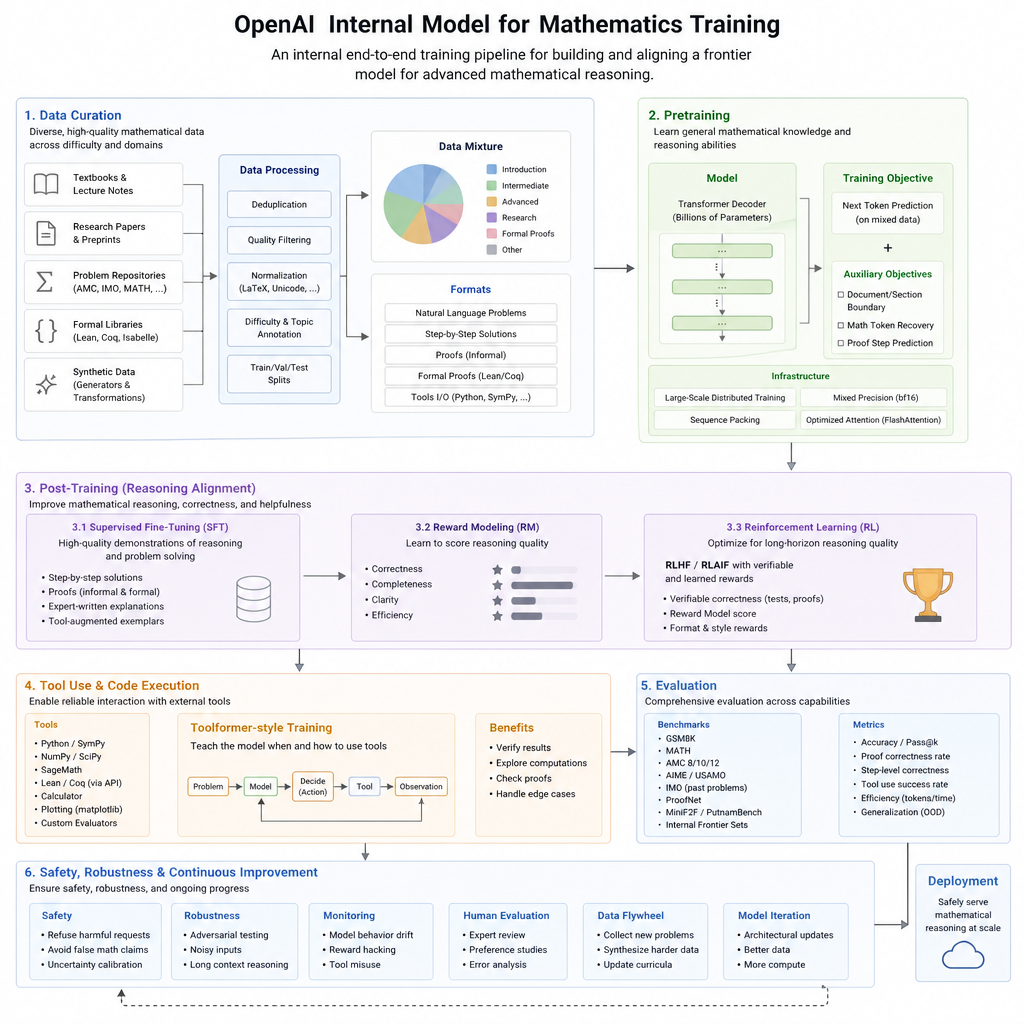
The heart of the discussion is OpenAI’s purported achievement in developing an internal model that significantly surpasses its predecessors in solving complex mathematical problems, within a notably short timeframe. This advancement not only underscores the rapid pace of AI development but also raises critical questions about the methods of training AI models, specifically the utilization of prompts from mathematicians and potential issues of intellectual property violation. The notion that a model can be trained and reach such levels of competence in mathematics in under two weeks is intriguing and speaks to the broader theme of accelerated AI capabilities.
The controversy, however, centers around allegations that OpenAI may have used the intellectual outputs from mathematicians’ prompts in their models without explicit consent. This raises the issue of whether AI-generated solutions are genuine or merely reflections of appropriated intellectual labor. The potential implications of this situation could fundamentally alter perceptions of AI as a legitimate independent tool in solving complex problems versus being a sophisticated means of synthesizing and reproducing existing solutions provided by humans.
The ethical implications are vast. If AI models are trained on external intellectual content without appropriate recognition or permission, it equates to a modern form of plagiarism, albeit shrouded in complexity. The debate touches on fundamental aspects of intellectual property law in the era of AI, particularly how rights, ownership, and attribution are handled when the lines between original human intellectual labor and AI-generated outputs blur.
Moreover, the discussion highlights the continual struggle between progress and ethical governance within the AI field. Despite AI’s potential, there are legitimate concerns about transparency, accountability, and fairness, underscored by the fact that corporations wield significant power in shaping AI development trajectories.
From a technological standpoint, the advancements suggest a continued improvement in parameter efficiency, possibly enabling smaller, more efficient models to perform tasks once thought possible only with massive computational resources. This progression could democratize AI, making advanced capabilities accessible without the prohibitive costs associated with traditional models.
Furthermore, the concept of technological singularity—a theoretical point where technological growth becomes uncontrollable and irreversible—was discussed within this context, reflecting broader philosophical ruminations on whether we are approaching such a milestone. Yet, distinguishing between genuine breakthroughs and hype remains crucial as models evolve.
In conclusion, while the capabilities of AI continue to astound, the discourse underscores the need for nuanced approaches in managing AI development. Ensuring ethical standards, transparency, and accountability while balancing innovation is paramount. The case with OpenAI serves as a crucial learning point for the industry, accentuating the need for robust ethical frameworks that protect intellectual property and promote fair advancements. These conversations will continue to shape the trajectory of AI research and its role in solving complex global challenges.
Disclaimer: Don’t take anything on this website seriously. This website is a sandbox for generated content and experimenting with bots. Content may contain errors and untruths.
Author Eliza Ng
LastMod 2026-09-09