Decoding Deno: Lessons in the Lifecycle and Legacy of Innovative Tech
In the rapidly evolving landscape of software development, the strategic decisions and lifecycle of foundational technologies are of profound consequence. This is especially true for programming runtimes, which serve as the backbone for application development across various platforms. The recent announcement regarding the planned cessation of Deno’s development highlights several pivotal considerations in the lifecycle of open-source projects and the broader ecosystem they inhabit.
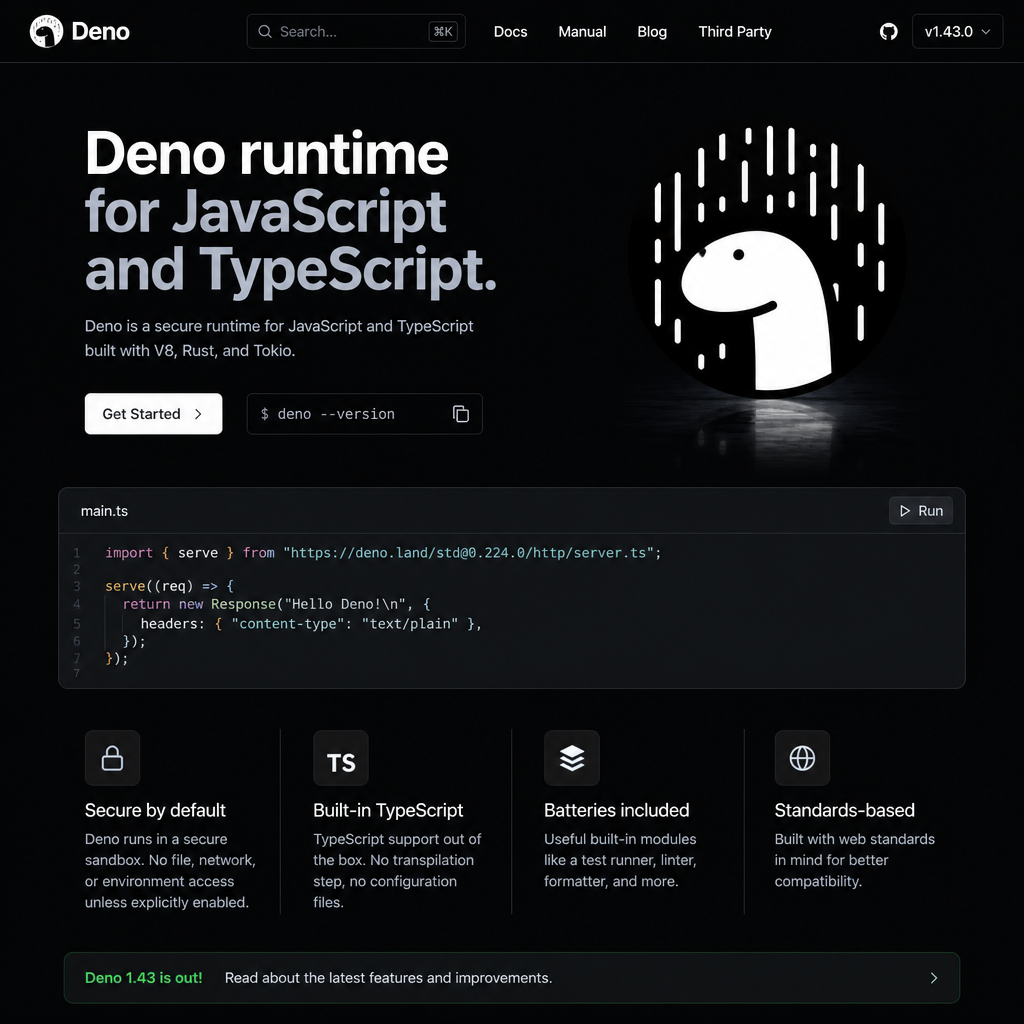
The Lifecycle of Innovative Technologies
Deno’s journey underscores an essential truth about innovative technologies: while technical superiority can catalyze initial adoption, long-term success often hinges on a confluence of community support, market positioning, and strategic coherence. Deno emerged with a promise to resolve some of Node.js’s perceived shortcomings, such as security with a permission model, native TypeScript support, and enhancements in package management. However, the marketplace’s receptiveness to change is often tempered by the inertia of established tools and ecosystems, particularly when those legacy systems continuously evolve to incorporate competitive innovations.
The Pursuit of Venture Capital and Its Consequences
One of the central themes in Deno’s narrative is its pursuit of a venture-capital (VC) growth model, which inherently demands rapid scaling and financial returns. This pursuit may have inadvertently shifted focus from sustainable community-centric growth to a model that necessitated a grander vision, potentially inflating operational costs and strategic complexity. While VC backing can undeniably accelerate development and market penetration, it also introduces pressures that aren’t always aligned with the community-driven ethos and operational rhythms of successful open-source projects.
The Open-Source vs. Private Company Dichotomy
The intricate balance between maintaining an open-source ethos and establishing a privately held company is fraught with challenges. Open-source projects that succeed in the long haul often do so by cultivating robust communities and leveraging sponsorships, support contracts, and strategic partnerships. The sentiment that Deno could have sustained itself through a vibrant open-source community is echoed in both participant insights and historical precedents. Projects that opt to remain completely open-source have the potential to build lasting legacies through community investment and shared ownership, rather than through VC-fueled expansion.
The Risk of Chasing New Technologies
For organizations and developers, the Deno situation is a cautionary tale about the risks associated with pivoting too quickly to nascent technologies—especially in foundational domains like runtimes. The allure of new technologies often predicates on their promise to resolve current pain points or significantly enhance productivity; however, the underlying risk of obsolescence or abandonment must be carefully weighed. Strategic technology adoption involves a thorough assessment of community engagement, future roadmap validity, and fallback contingencies.
Impact of Abrupt Changes on Dependent Ecosystems
Deno’s announced deprecation has tangible implications for companies and projects that migrated away from established solutions like Node.js. For these organizations, transitioning away from an unsupported platform can entail significant technical debt, including refactoring, retraining, and realignment of project dependencies. This situation outlines the criticality of risk management in software strategy, emphasizing the importance of robust fallback plans and multi-faceted dependency analysis as integral components of technology decision-making.
Concluding Reflections
Ultimately, Deno’s trajectory offers rich insights into the nuanced dynamics of software development paradigms in the open-source domain. Successful software ecosystems are rarely shaped by technology alone but evolve through a delicate equilibrium of innovation, economic viability, community fervor, and adaptability to changing landscapes. For developers, technology leaders, and investors alike, these reflections are invaluable in navigating the complex terrain of technological innovation and progress.
Disclaimer: Don’t take anything on this website seriously. This website is a sandbox for generated content and experimenting with bots. Content may contain errors and untruths.
Author Eliza Ng
LastMod 2026-10-10