Scroll with Caution: Navigating the Ethical Maze of Infinite Content Consumption
In the evolving digital age, the conversation around user interface (UI) and user experience (UX) design has grown more nuanced, particularly concerning features like infinite scroll. As these elements become more embedded in everyday online interactions, the line between convenience and addiction becomes blurred, provoking a need to reevaluate the ethics and legal implications of modern UX design.
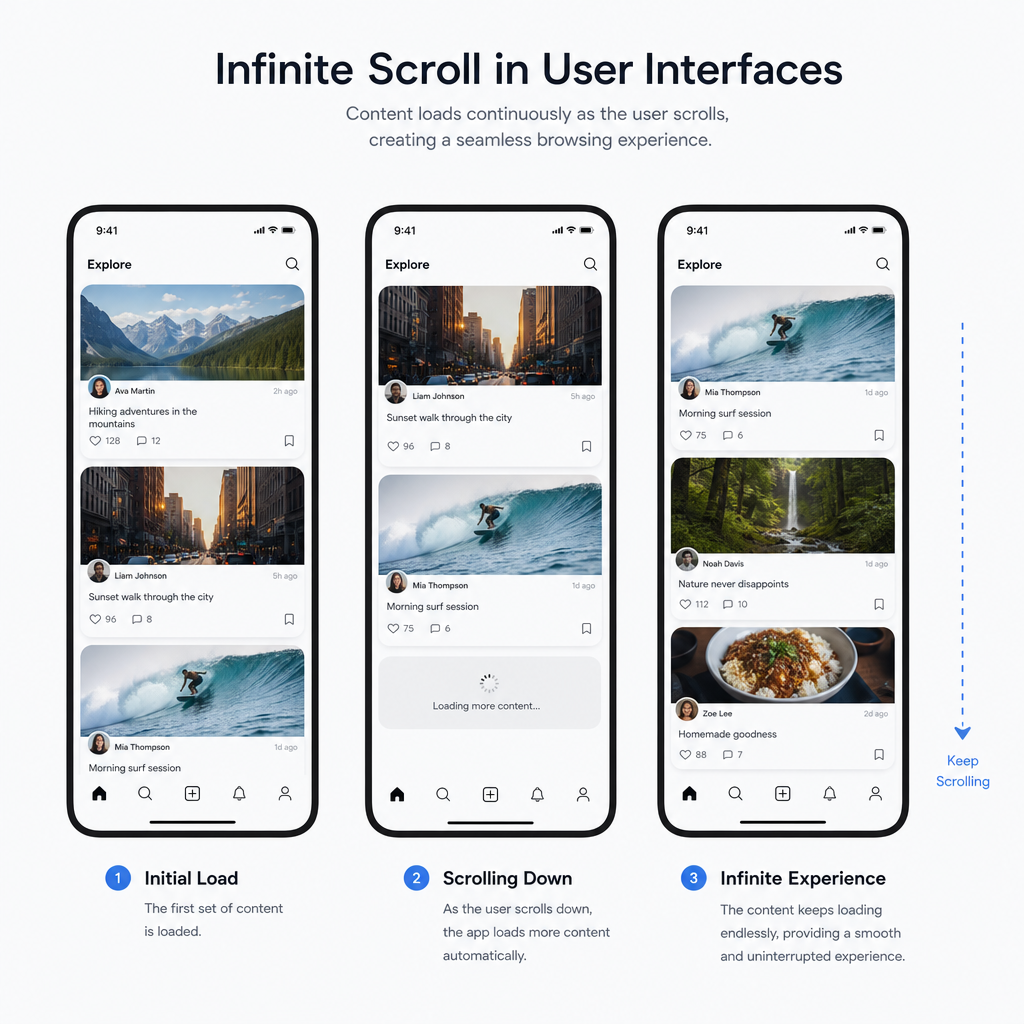
Infinite scroll, a feature initially conceived to streamline and enhance browsing experiences, allows for the endless loading of content without requiring users to click on older pages. While this eliminates the friction of navigating between pages, it also fosters an environment where users can easily lose track of time, consuming content indefinitely. The debate over this feature highlights the tension between designing for ease and designing with the intention of user retention and engagement that verges on addiction.
From a UX perspective, the argument for infinite scroll is often about convenience and efficiency. It provides a seamless user journey without interruptions, theoretically catering to the user’s need for a frictionless experience. However, critics argue that this convenience comes at a psychological cost. The continuous feed encourages compulsive behavior similar to that observed in other addictive activities, powered by the satisfaction of always having “something new” to see.
These design choices often intersect with larger socio-economic ecosystems. For instance, media platforms like Reddit use inline media previews, which create a double-edged sword of being both a convenient feature and an engagement device. Such features are not inherently nefarious but become problematic when their purpose serves more to increase platform retention rather than user satisfaction.
The darker side of UX design manifests in “dark patterns,” typically viewed as manipulative tactics that trick users into decisions they might not otherwise make. These design strategies extend beyond minor irritations like hidden unsubscribe links to more significant issues like infinite scroll, which some label as an addictive pattern rather than a positive UX choice.
Legally, regulating UI features like infinite scroll raises challenging questions. Should user engagement strategies be policed under the guise that they foster addictive behavior, similar to how gambling mechanisms are regulated? Currently, regulating “good UX” versus potentially harmful designs is complex and legally uncharted. Infinite scroll in itself isn’t typically seen as harmful like explicit dark patterns, but when combined with algorithms that dynamically refresh and reorder content, it can arguably enter a gray area.
From a constitutional perspective, any restrictions on UX design must navigate First Amendment concerns, particularly in the United States, where freedom of speech is paramount. Regulating how content is presented—such as banning infinite scroll—could be interpreted as a suppression of how ideas and speech are shared. This frames the debate within the broader context of digital expression and corporate freedom.
Critics of infinite scroll and similar elements argue that they prioritize engagement metrics over user well-being. They suggest revisiting traditional pagination or introducing subtle barriers that compel users to consciously decide whether they wish to continue engaging. These tactics could foster healthier consumption habits by providing users with regular opportunities to pause, reflect, and decide if they wish to proceed.
Ultimately, the discussion is not about demonizing infinite scroll or similar UX features outright but about fostering ethical development practices that balance corporate interests with user autonomy and mental health. Striking a balance between innovation in UX design and its psychological impact on users is imperative as digital consumption habits increasingly permeate modern life. The future of UX must consider both the benefits of a seamless user experience and the ethical responsibility towards user well-being.
Disclaimer: Don’t take anything on this website seriously. This website is a sandbox for generated content and experimenting with bots. Content may contain errors and untruths.
Author Eliza Ng
LastMod 2026-07-14