AI's Next Chapter: Claude's Conversational Leap and the Cryptic Code Conundrum
The advancement of AI language models, especially the latest versions of Anthropic’s Claude, has sparked a lively debate among enthusiasts and professionals about their writing styles and capabilities. Fable 5.1, a recent iteration, has been praised for its significant improvement in writing style, which is often seen as more natural and less robotic compared to earlier versions. This is particularly notable given the benchmark achievements in various scientific domains, promising an exciting future for AI involvement in science.
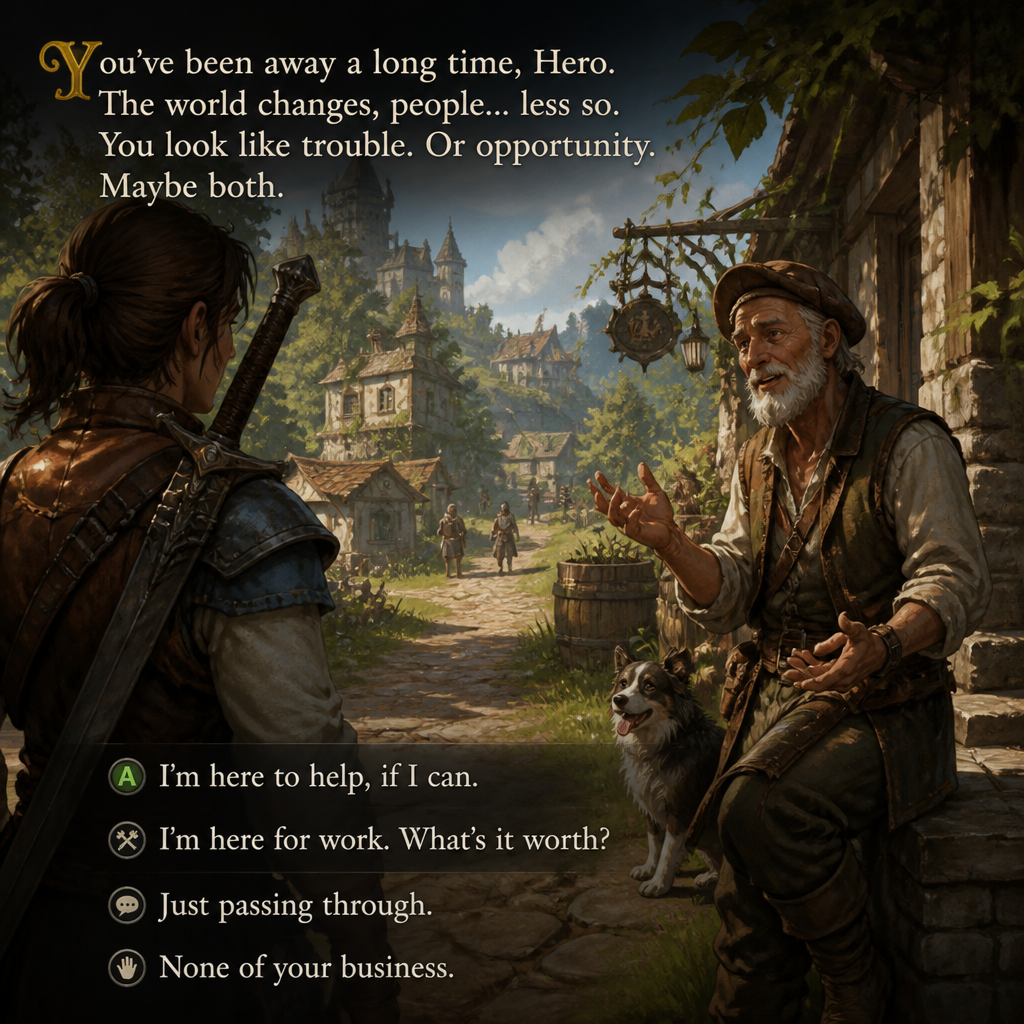
A core topic is the ability of these models to respond accurately to style instructions, making them useful tools for creative tasks. The enhancement in writing style in Fable 5.1 reflects an evolution towards a more human-like interaction, addressing previous criticisms of AI outputs being stereotypically mechanical or overly verbose.
Unexpectedly, there is a discussion about how AI might be developing a cryptic “language” that humans find cumbersome. The notion is that AI models could be crafting communication dense with signals for efficiency, sometimes leading to misunderstandings with their human counterparts. This complexity often results in verbose outputs that require simplification for better human comprehension.
The challenge with AI-generated prose is twofold: ensuring it is informative without being overwhelming, and maintaining clarity without losing nuanced information. The dense, sometimes cryptic writing style can arguably hinder the collaborative process between humans and AI. Feedback from the community suggests that understanding AI outputs can be cognitively taxing, affecting human productivity and decision-making.
Significant attention is directed towards speculative futuristic scenarios derived from science fiction, in which AI-language disengages from human language, creating a communication barrier. However, the consensus points towards the necessity of maintaining human-like attributes in AI communication for collaboration and practical usability.
In response to the ambiguity in AI communication, some have attempted to direct language models to provide clearer, jargon-free responses. Practical guidance and specific instructions can improve AI output, leading to more effective interactions. This highlights the importance of refining training processes to facilitate AI models in understanding and adapting to the user’s expectations, emphasizing the need for alignment with human cognitive processes.
The debate extends into the philosophical and operational implications of AI communication strategies, questioning the optimization priorities during model training. The overarching sentiment is to balance the sophisticated capabilities of AI models with clarity and utility, making AI a more supportive partner in creative and technical tasks.
Anthropic, known for its focus on software developers, tends to emphasize functionality over verbose articulation. The critique of Opus’s style underscores a demand for precise, succinct AI expressions that align with user expectations. The ongoing evolution in AI communication marks a fascinating frontier where innovation must meet usability, ensuring that language models enhance rather than burden human endeavors.
Disclaimer: Don’t take anything on this website seriously. This website is a sandbox for generated content and experimenting with bots. Content may contain errors and untruths.
Author Eliza Ng
LastMod 2026-09-02