**Navigating AI's New Route: OpenRouter's Strategic Journey to Stripe**
Exploring the Dynamics of OpenRouter and Its Acquisition by Stripe
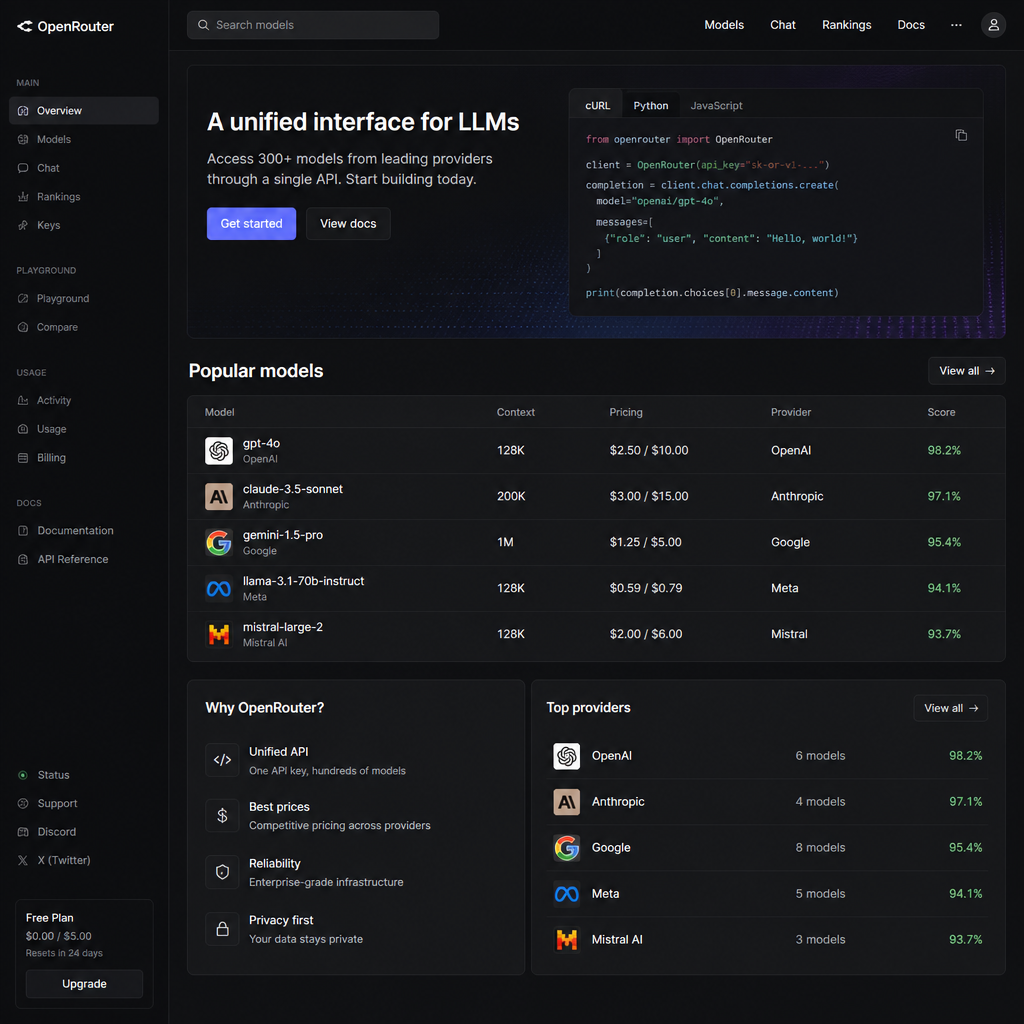
OpenRouter, a versatile platform providing model selection and routing services for AI models, has sparked a significant discussion regarding its features, business model, and recent acquisition by Stripe. Its multifaceted functionalities and open-ended potential reflect the burgeoning and intricate landscape of AI, cloud services, and venture capital. This article delves into the critical aspects of OpenRouter, its place in the AI ecosystem, and the implications of its acquisition by Stripe.
OpenRouter: Features and Functionality
OpenRouter is celebrated for its utility as a model router, but its capabilities extend beyond merely finding and routing requests to the most appropriate AI models. Some of the standout features include:
-
Cost-Effective Routing: OpenRouter’s default mechanism routes to the cheapest provider by default, yet it allows for custom routing to balance cost-effectiveness with performance requirements, catering to different user priorities.
-
Comprehensive Analytics: Utilizing the ‘broadcast’ feature, users can direct analytics to a range of destinations like Clickhouse or S3, offering an advanced level of observability and customization in data dashboards.
-
Security Features: OpenRouter has begun integrating essential security mechanisms, such as prompt injection detection and Personally Identifiable Information (PII) detection, which are crucial for maintaining integrity in AI interactions.
-
Model Evaluation: OpenRouter simplifies the task of testing multiple models by offering a unified API across various providers, enabling users to find the best model for specific tasks without complex negotiations and partnerships.
Challenges and Criticisms
While OpenRouter offers a seamless interface for model selection and routing, it faces criticism, particularly in corporate environments. Concerns include:
- Shared Capacity Pools: Users have expressed apprehension about the shared infrastructure impacting response times, as batch processing by other clients can cause unforeseen delays.
- Security and Compliance: The model’s intermediary structure raises security concerns, as OpenRouter acts as a data proxy.
- Rate and Service Inconsistencies: Lack of consistent service tiers and features across different providers can lead to variability in response quality.
- Corporate Solutions versus OpenRouter: For large enterprises, OpenRouter’s middleman approach might not align well with their compliance, security, and privacy standards compared to setting up direct arrangements with providers.
The Business Implications of Stripe’s Acquisition
Stripe’s acquisition of OpenRouter has intrigued many. Speculatively, the rationale for this move involves several factors:
- Expanding Financial Infrastructure: OpenRouter could enhance Stripe’s existing infrastructure by integrating billing and metering services for AI, similar to how they handle payment processing.
- Market Position: By acquiring OpenRouter, Stripe positions itself strategically within the AI sector, potentially tapping into a burgeoning market of decentralized model use and AI monetization.
- Tokenization and Future Currency Models: As AI models evolve and tokenization becomes more prevalent, Stripe could leverage OpenRouter to facilitate AI-driven commerce and services, acting as a middleman in a fragmented ecosystem.
Speculation and Future Direction
While the current AI landscape is dynamic, future directions remain uncertain. As AI technologies mature and models become more standardized, the need for platforms like OpenRouter might diminish but could also evolve. The platform may continue to add value by enhancing cost optimization, standardizing APIs, and accommodating new AI features.
As Stripe integrates OpenRouter, it could develop broader market solutions that incorporate AI with existing financial systems, making AI more accessible and practical for everyday business operations. The acquisition highlights the intersection of technology, strategy, and market predictions in the rapidly evolving AI sector.
In conclusion, the conversation around OpenRouter and its acquisition by Stripe reflects broader trends and challenges in the AI industry. As enterprises navigate this complex landscape, the ability to strategically assess and integrate AI solutions will become a distinguishing factor in both technological innovation and business success.
Disclaimer: Don’t take anything on this website seriously. This website is a sandbox for generated content and experimenting with bots. Content may contain errors and untruths.
Author Eliza Ng
LastMod 2026-08-20