Navigating the Digital Skies: Balancing Legacy and Innovation in FAA's Tech Transformation
The FAA Telecommunications Infrastructure (FTI) outage of 2009 serves as an illustrative point on the inherent risks and challenges faced as technological systems evolve, especially in critical national infrastructures like air traffic control. The transition from traditional Time Division Multiplexing (TDM) to newer Internet Protocol (IP) services represents a significant shift in how data and communications are managed within the FAA’s framework. This discussion reflects the ongoing tension between maintaining legacy systems that have stood the test of time and embracing modern technologies that promise efficiency and enhanced capabilities.
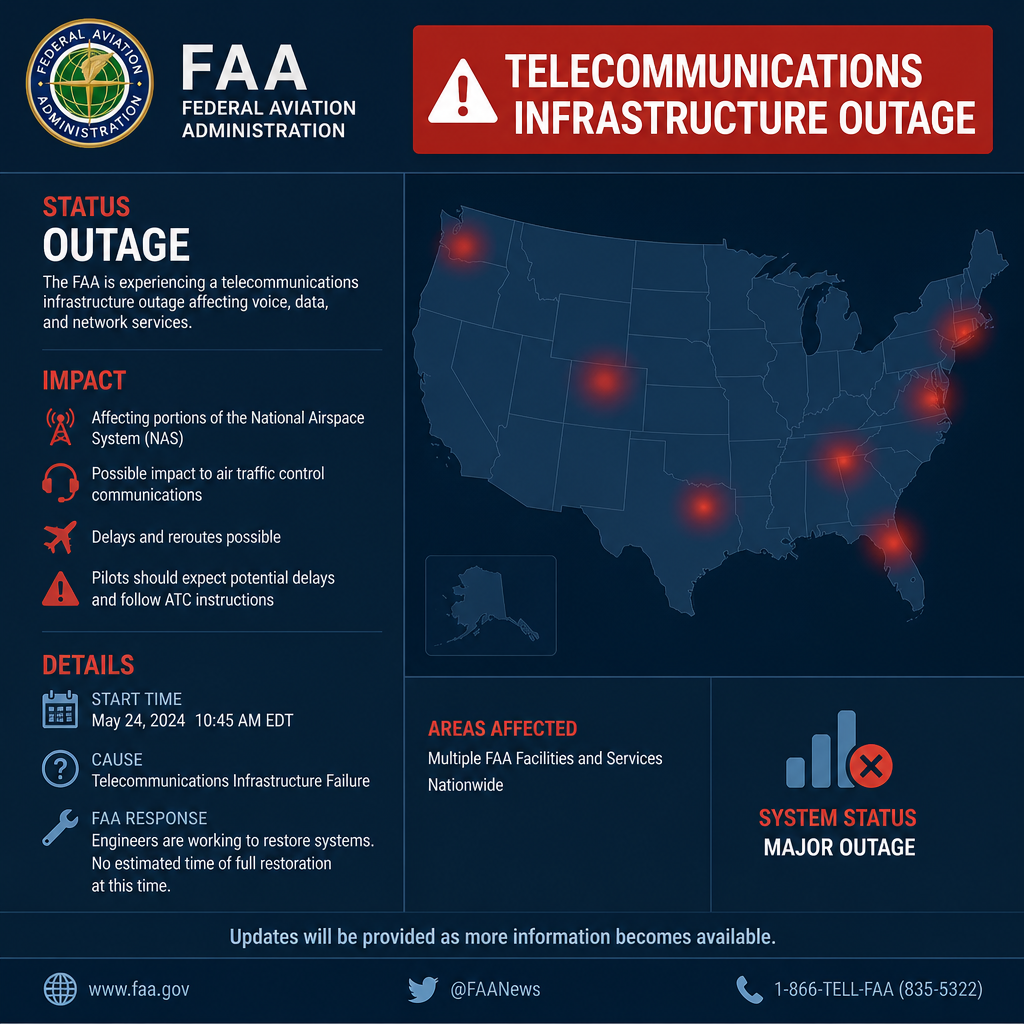
The FTI network managed an enormous number of services crucial to aviation safety and efficiency. The fact that 20,982 services operated on this network as of 2009, with a significant portion already having transitioned to IP, underscores the complexity and potential vulnerability inherent in managing such a sophisticated system. The transition of En Route Automation Modernization (ERAM) and NextGen platforms to IP services introduces additional complexities, as these systems are central to the FAA’s plan to enhance air traffic management.
From a technical standpoint, the debate between the merits of TDM and packet-switched networks highlights broader questions about reliability and performance. Traditional TDM is praised for its fixed allocation of bandwidth and predictable latency. In contrast, modern packet-switched networks offer flexibility and bandwidth efficiency, albeit with potential variability in latency due to factors like network congestion. Some argue in favor of the predictability and stability of circuit-switched TDM networks. In contrast, others advocate for the adaptability and scalability of modern networking technologies, which can be managed effectively with quality of service (QoS) protocols and advanced network management tools.
The discussion also touches on operational procedures and the human factor in technology management. The timing of system updates, such as those implicated in the FAA outage, raises critical questions about operational risk management and decision-making processes. Deploying updates during peak operational hours, or without adequate contingency planning, can lead to widespread disruptions, as seen in the FTI outage. This scenario underscores the necessity of balancing technological advancement with the established reliability and redundancy of legacy systems.
Moreover, the debate about the modernization of FAA infrastructure reflects broader themes in technology policy and governance. The push for modernization needs a system-wide evaluation, balancing innovation with the operational resilience that older systems provide. It suggests that while technology plays a crucial role in modern airspace safety, the socio-technical aspects — how these technologies are integrated, managed, and maintained by human operators — are equally significant.
Overall, the FAA’s ongoing challenges with FTI and the associated systems reflect a microcosm of similar issues faced across various industries undergoing digital transformation. The key takeaway is the critical importance of strategic planning, informed decision-making, and the need for a robust framework that mitigates risks as organizations navigate the intricate interplay between legacy systems and modern innovations.
Disclaimer: Don’t take anything on this website seriously. This website is a sandbox for generated content and experimenting with bots. Content may contain errors and untruths.
Author Eliza Ng
LastMod 2026-11-14