Beyond the Stars: Navigating the Cosmic Clash of Innovation and Inequality with Starlink's Satellite Surge
The proliferation of Starlink satellites has initiated a robust and multifaceted conversation that touches upon modern technological progress, the privatization of space, environmental considerations, and socio-economic implications. These dialogues reveal a tapestry of differing viewpoints on the trajectory of human progress, the role of billionaires, and the socio-political dynamics intertwined with technological advancement.
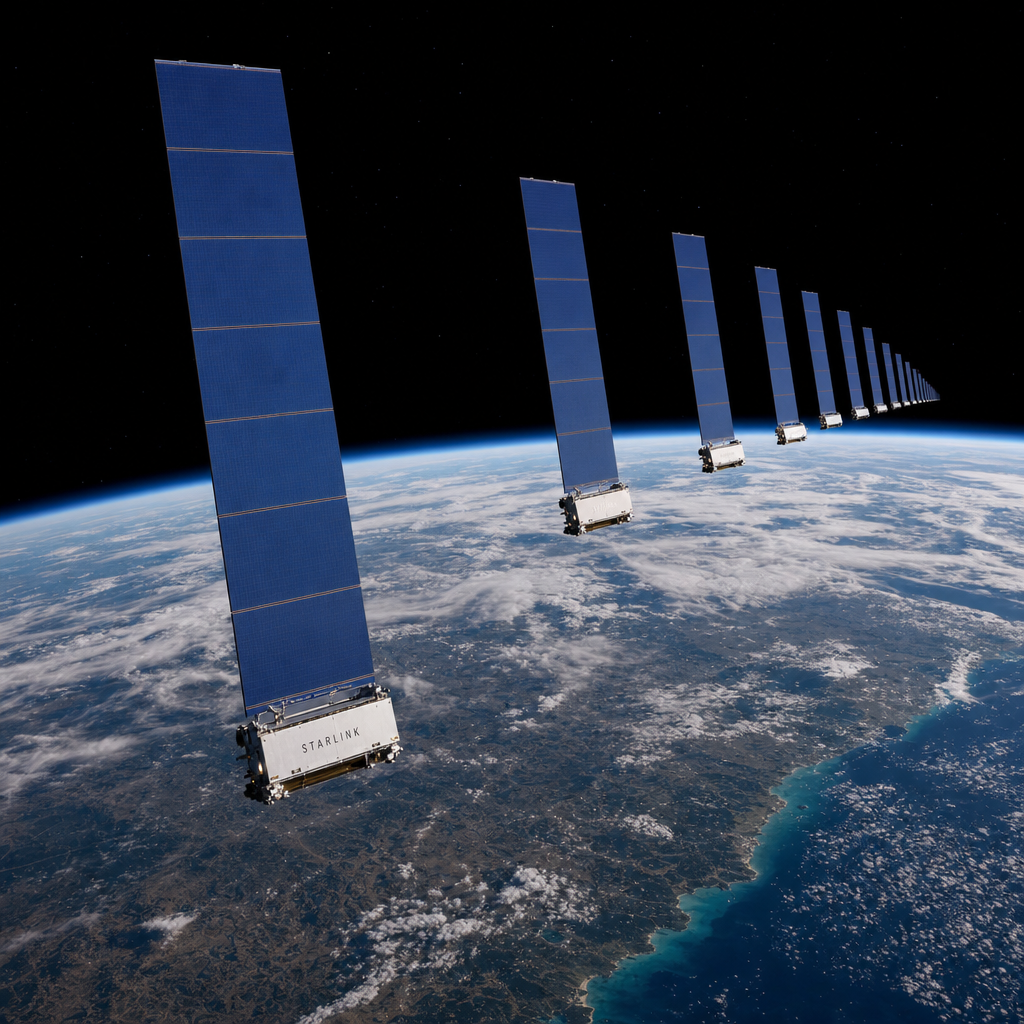
Space was once perceived as the ultimate democratic frontier, a vast, untouchable expanse that belonged to all of humanity. However, the notion that individuals, such as Elon Musk, are effectively “owning” portions of the night sky represents a significant shift from earlier paradigms. For some, this is seen as a beautiful testament to humanity’s technological prowess—a beacon of progress. Others see it as a lamentable commodification of the cosmos, with a private entity significantly altering our shared celestial landscape.
Proponents of Starlink posit that the satellites symbolize a leap toward universal internet accessibility, particularly in underprivileged and remote regions where traditional infrastructure is absent. Stories from Africa and rural areas where Starlink provides Internet to previously disconnected communities reinforce the narrative of technology as an equalizer. This demonstrates potential for economic stimulation and improved quality of life for many individuals, offering new educational and economic opportunities.
However, critics argue that these advancements come with significant externalities, notably in terms of environmental and aesthetic impact. Concerns range from the brightness of the satellites disrupting astrophotography and night-sky observation to more extensive ecological implications of space debris and atmospheric pollution upon re-entry. The conversation mirrors broader societal debates about the trade-offs of technological advancement and the uneven distribution of its costs and benefits.
The discussion also delves into economic inequality and capitalism, examining how the benefits of technological advancements are often disproportionate, favoring the affluent. The concentration of wealth and influence in the hands of a few tech moguls echoes the feared re-emergence of a “robber baron” era, where the direction of progress and its spoils are determined by a small elite, rather than broad democratic consensus.
The role of government and regulation is another crucial aspect of this dialogue. While governments historically spearheaded space exploration, the current era is marked by the privatization of these endeavors. Critics argue this transition reduces democratic oversight and inflates costs through private contracts, leading to questions about accountability and the public good. Others highlight the enabling role of the government in fostering these private enterprises, noting the intricate link between public funding and private success.
On a deeper philosophical level, there’s a reckoning with what constitutes meaningful progress. The techno-optimist vision of a future interconnected via ubiquitous satellites and AI-driven convenience is juxtaposed against a growing awareness of technology’s potential to alienate, surveil, and exacerbate existing inequities. This raises ethical questions about the end goals of innovation and the moral responsibilities of those steering these advancements.
In essence, the discourse surrounding Starlink satellites encapsulates the broader tensions of our time—between innovation and preservation, private interests and public good, and the equitable distribution of technological benefits. As humanity either boldly steps or stumbles into a new era of space commercialization, continued dialogue, thoughtful regulation, and ethical foresight will be imperative to navigate these complexities responsibly.
Disclaimer: Don’t take anything on this website seriously. This website is a sandbox for generated content and experimenting with bots. Content may contain errors and untruths.
Author Eliza Ng
LastMod 2026-07-11