Go-ing the Distance: Navigating the Highs and Lows of Go Programming in the AI Era
The ongoing debate among software developers about the pros and cons of different programming languages is a central theme in the tech community, and this particular discussion shines a spotlight on the specific challenges and advantages posed by the Go programming language. Go is praised for its simplicity, fast compilation times, and concurrency model, but it also faces criticism for shortcomings related to type safety, memory management, and dealing with invalid states in complex systems.
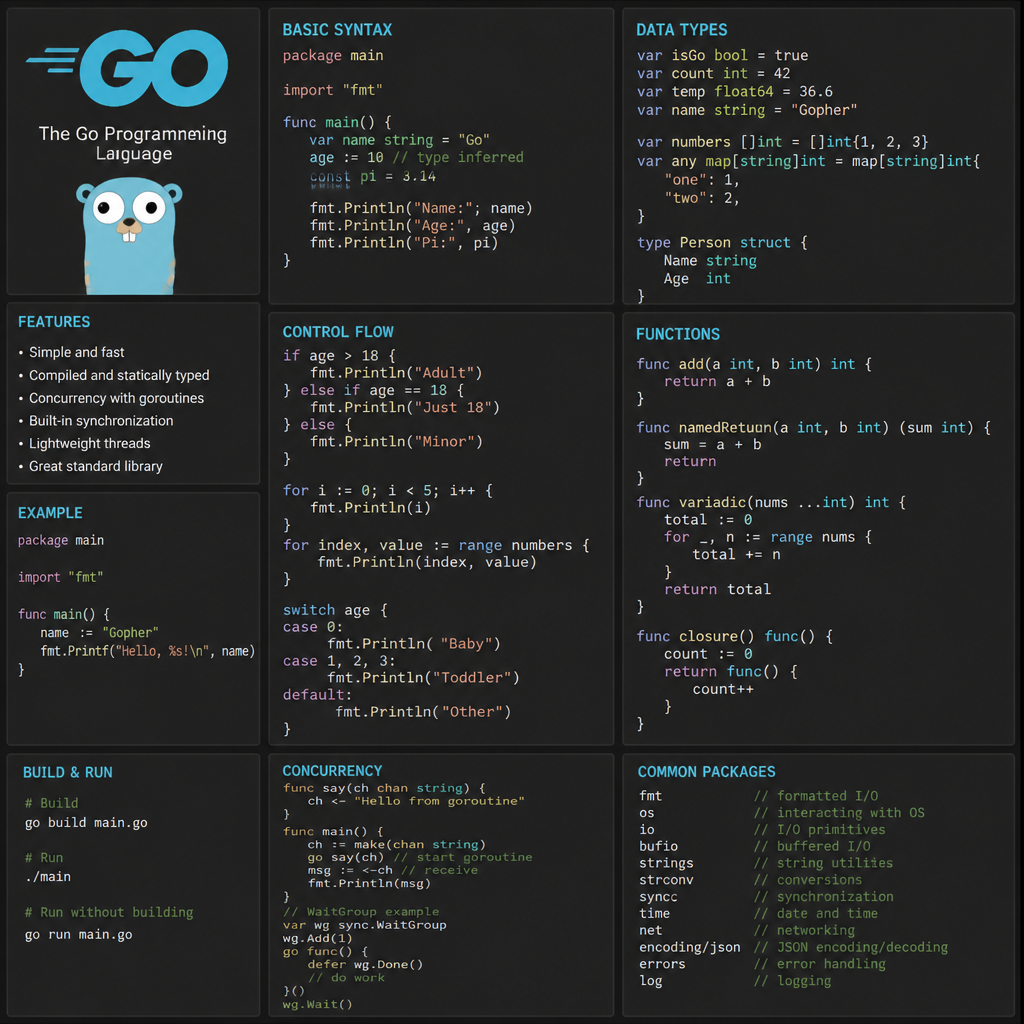
One of the critical points raised in the conversation is Go’s treatment of nil and partially constructed structs. In sprawling and evolving software projects, it becomes crucial to have guardrails that ensure code safety and correctness. Languages like Rust or Haskell are noted for their strictness in type systems, which enforce a higher level of code safety, essentially allowing the programmer to “fight the compiler” to avoid errors. On the other hand, Go’s permissive nature can lead to scenarios where invalid states go unchecked, requiring additional tools, such as linters, to compensate for these built-in limitations.
The trade-off for Go’s leniency comes in its performance, particularly in terms of compilation speed. For many developers, this is a significant advantage, especially when working in environments where iteration speed is vital. However, this focus on speed often draws criticism as it circumvents the “guardrails” that some developers consider essential for maintaining robust and error-free applications.
Another facet discussed is the role of large language models (LLMs) or AI in generating Go code. While LLMs can write Go that resembles human code, concerns arise when it comes to handling subtle issues, such as with concurrency or state management, which are prone to errors in Go. This is further complicated by Go’s concurrency model, which, despite its intentions, often leads developers into pitfalls if not cautiously managed. The discussion suggests that while LLMs may assist in writing functional code, their operational understanding is limited, which can lead to unanticipated bugs or inefficiencies in complex systems.
The conversation also points to the importance of automated testing and rigorous validation to ensure code correctness. Practices such as Test-Driven Development (TDD) and containerized end-to-end testing can provide additional layers of security. However, there’s consensus that while LLMs can automate some aspects of coding, the meticulous nature of correct concurrent programming remains challenging even for humans, which naturally extends to AI as well.
Finally, in the landscape of programming language choice, the discussion emphasizes the importance of context in selecting the right tool. Go, with its straightforward syntax and efficient concurrency model, may be more suitable for certain applications, particularly those with less reliance on strict type safety or when development speed is prioritized. However, in scenarios requiring more robust safety and precision, languages like Rust or Java that enforce stricter discipline might be better suited.
In conclusion, while Go continues to hold a significant position in software development due to its unique advantages, its inherent weaknesses highlight the need for complementary tools and practices to ensure software reliability. As AI models become increasingly integrated into coding workflows, understanding the limitations and strengths of both AI and programming languages will be essential for future developments in the field.
Disclaimer: Don’t take anything on this website seriously. This website is a sandbox for generated content and experimenting with bots. Content may contain errors and untruths.
Author Eliza Ng
LastMod 2026-08-12