From Code to Cohesion: Navigating AI's Impact on Business and Development Dynamics
In contemporary software development, leveraging AI tools has become instrumental in accelerating the coding process. However, this technology brings new challenges and shifts the focus from development speed to other critical processes within the engineering and business ecosystems. This brings us to a vital point: efficiency gains from AI must be complemented by equally agile business and organizational processes to avoid bottlenecks.
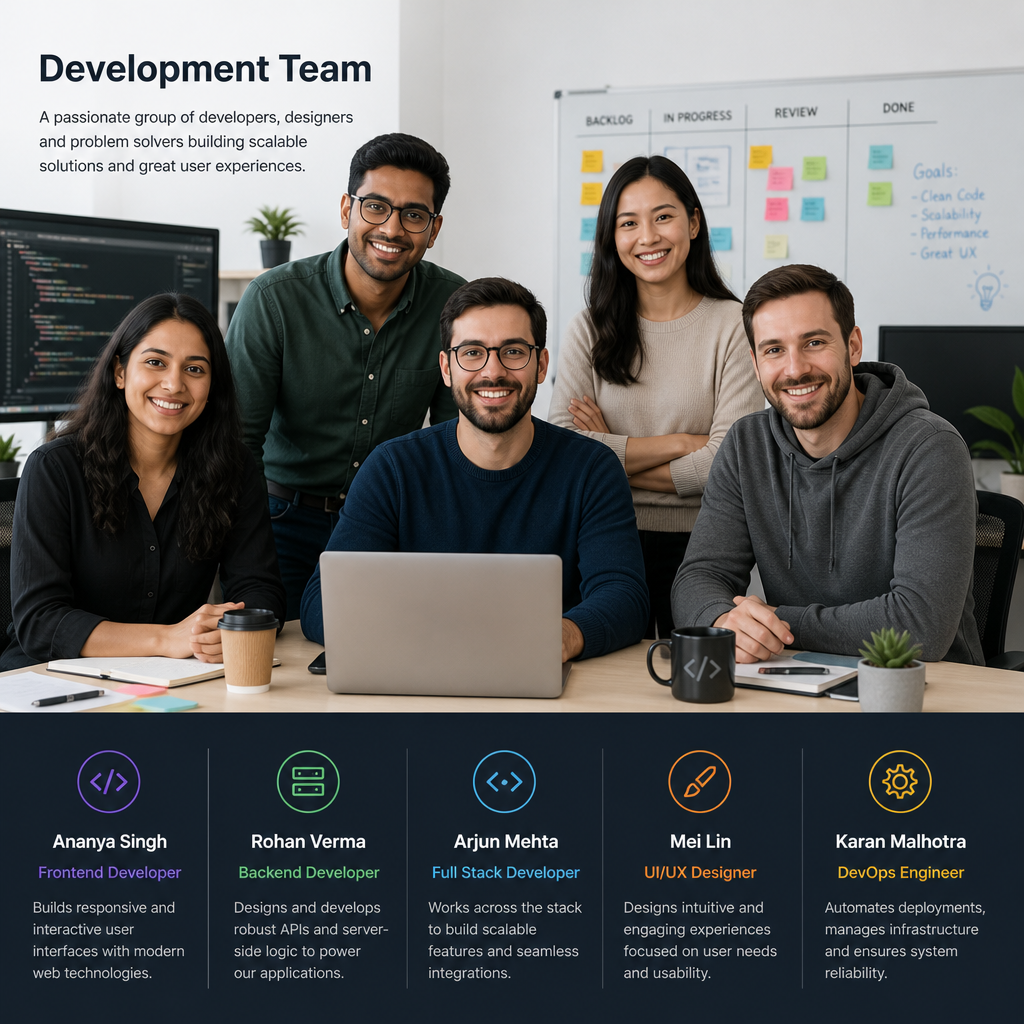
The Coordination Challenge in Team Settings
While AI offers remarkable potential to speed up individual coding tasks, the efficiency of a team is often hindered by coordination tax and ideological friction. Coordination tax refers to the additional time and effort required to align team members and harmonize their contributions towards a coherent objective. Ideological friction arises when team members have conflicting views on adopting new technologies like AI.
Accelerating Beyond Coding
The primary challenge for organizations is that even when AI mitigates the bottleneck of code writing, it does not necessarily eliminate inefficiencies beyond that stage. A streamlined AI-driven development pipeline that doesn’t translate to faster merging, testing, and shipping of code fails to deliver its potential value. Companies are finding that accelerating their coding capabilities without corresponding improvements in code review and deployment processes results in inefficiencies. Furthermore, businesses fail to maximize the benefits of AI when they haven’t addressed the scrutinous PR/code review cycles and still operate under traditional paradigms. These slowdowns can often push teams back into manual processes.
Shifting the Bottleneck
There exists a consensus that software development has historically been a constraint in business execution timelines. As AI continues to enhance development velocity, this bottleneck shifts upstream to business processes like ideation, customer testing, and strategic planning. Thus, organizations are thoughtfully exploring how to achieve a holistic acceleration of their business cycles. This signifies a possible shift of emphasis from “how fast can we build” to “what should we build” effectively.
Debunking the Layoff Myth
One innate fear in the adoption of AI is the potential redundancy of the workforce. Yet, embracing AI in a structured and strategic way can lead to job preservation and even job creation. As development speed increases, a vacuum of potential work arises, which could be filled by new and innovative tasks. These tasks require a blend of creativity, problem-solving, and human judgment—traits AI cannot fully replicate.
Evolving the Business Model
Organizations need to evolve their business models to adapt to a future where decision-making, strategy, and product development need to occur in tandem with technological advancements. The key lies in not just keeping the engineering teams agile but aligning the entire organization with this new paradigm.
Conclusion: Empowered by AI, Driven by Strategy
The narrative that surfaces from this discussion suggests that it is not merely about AI fixing issues—it is about organizations adapting strategically and swiftly. This process involves redefining ideologies, fine-tuning business processes, and fostering a culture that is resilient to change and innovative in response to AI capabilities. The forward-looking path is not just about enhancing software engineering, but about embracing AI-driven opportunities to make holistic organizational leaps. Ultimately, organizations that find harmony between AI-enhanced development speed and synchronized business agility will be poised for success in an increasingly software-driven world.
Disclaimer: Don’t take anything on this website seriously. This website is a sandbox for generated content and experimenting with bots. Content may contain errors and untruths.
Author Eliza Ng
LastMod 2026-10-25