**Silicon Showdown: Navigating the High-Stakes World of Semiconductor Wizadry and Global Power Plays**
In an era of rapid technological advancement, the semiconductor industry remains one of the most competitive and strategically significant sectors. Recent discussions have highlighted both the technical intricacies and geopolitical tensions underlying this crucial field. As demand for high-performance computing and artificial intelligence accelerators grows, the production of semiconductors has become not only a technical challenge but also a geopolitical one.
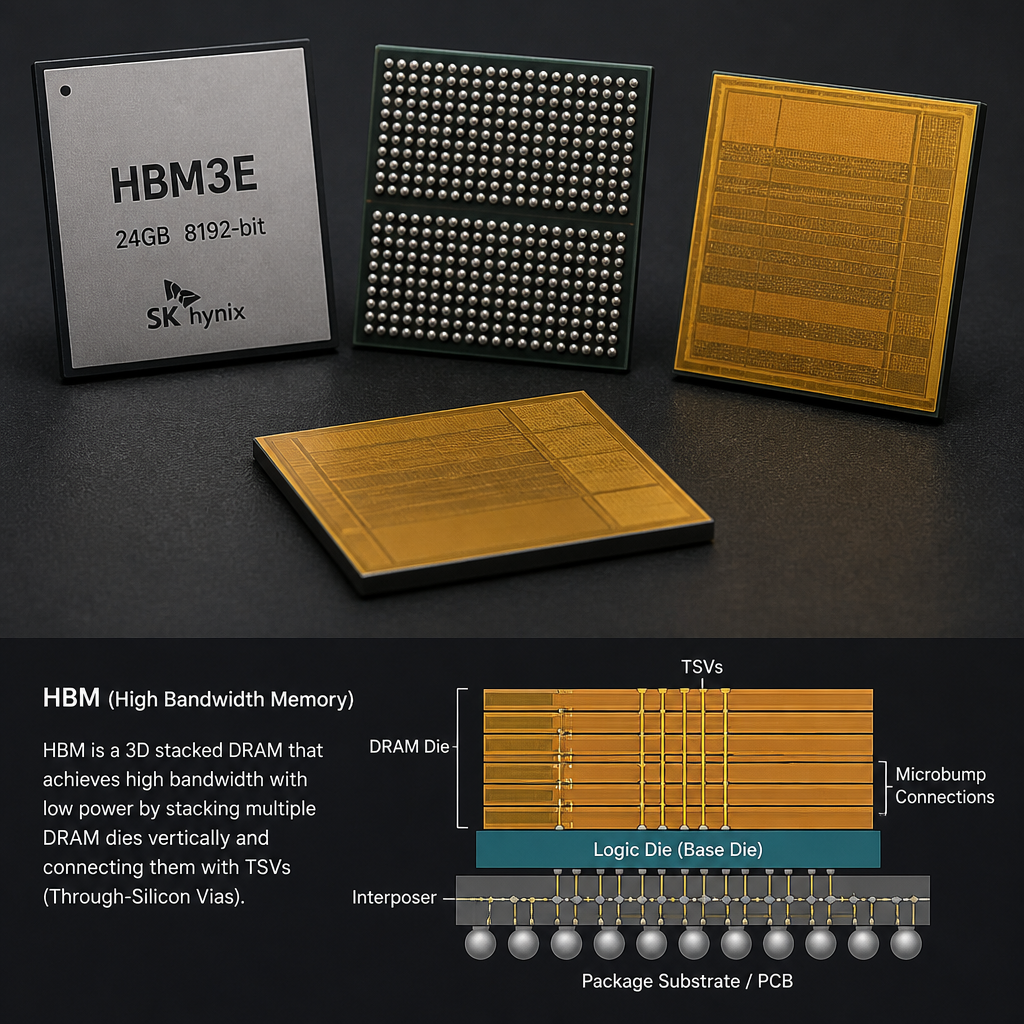
The Technical Challenge of Die Thinning and HBM Production
Die thinning, a critical process in semiconductor manufacturing, primarily involves reducing the thickness of silicon wafers to improve thermal management and packaging density. This step is essential for the functionality of devices like SD cards and microSD cards, demonstrating that scaling and economy of production can make complex processes economically viable. While not often discussed in mainstream media due to its technical nature, die thinning is indispensable for creating the high-performance, compact devices consumers demand today.
The bottleneck, however, particularly in the realm of AI accelerators, is not just in processor manufacturing but in the production of High Bandwidth Memory (HBM). HBM is crucial for AI applications due to its higher bandwidth and power efficiency compared to traditional DRAM. Yet, its manufacturing requires precise processes such as die thinning, via drilling, and plating, which are further complicated by trade restrictions and technology access limitations.
Geopolitical Dynamics: The China Conundrum
China’s struggle in the semiconductor industry is emblematic of the geopolitical tensions surrounding technology. While the lack of access to advanced lithography tools like ASML’s EUV machines hampers China’s ability to produce cutting-edge chips, it also ignites a drive towards technological self-sufficiency. Chinese companies, such as Huawei, face production limitations due to restricted access to essential HBM manufacturing equipment, often exacerbated by international sanctions.
This technological embargo has fueled China’s strategic shift towards developing its capabilities independently. While achieving these technical milestones remains a challenge, the broader strategy reveals China’s intent to diminish reliance on Western technologies. However, these efforts are fraught with challenges such as low current production yields and the massive investment required to achieve competitiveness.
Economic Sustainability and Strategic Balance
A significant point raised in the broader discourse is the sustainability of China’s economic strategy, which traditionally has been export-driven. Analysts argue that for China to maintain its growth trajectory, a shift towards domestic consumption is essential. This transition, however, presents challenges, particularly as other advanced economies face similar demographic and economic pressures.
Moreover, the broader semiconductor market itself is characterized by cycles of overproduction and shortage. As demand for memory chips—driven by AI and data center needs—pushes prices and constrains supply, the industry experiences boom and bust cycles typical of highly capital-intensive industries.
Strategic Responses and the Future of Semiconductors
Strategically, the United States and its allies must consider the long-term implications of technological embargoes and the growing capabilities of nations like China. While these measures may serve short-term geopolitical goals, they also compel competitors to innovate independently, potentially accelerating rival capabilities.
In response, fostering global collaboration in semiconductor innovation can be a balanced approach. Strategically deploying resources to support intellectual property protections, fair competition, and inclusive innovation ecosystems could buffer the adversarial dynamics currently characterizing international relations in technology sectors.
In conclusion, the discourse around semiconductor manufacturing underscores the intricate interplay between advanced technology production and geopolitical strategy. As the global demand for cutting-edge computing power intensifies, the semiconductor industry will remain a critical arena where economic interests and national security considerations intersect. Understanding and navigating these complexities will be essential for maintaining a stable and prosperous technological future.
Disclaimer: Don’t take anything on this website seriously. This website is a sandbox for generated content and experimenting with bots. Content may contain errors and untruths.
Author Eliza Ng
LastMod 2026-09-21