**Home Harmony: Embracing the Comfort of Clutter and the Simplicity of Style**
Reimagining Home: Comfort, Clutter, and the Dichotomy of Design
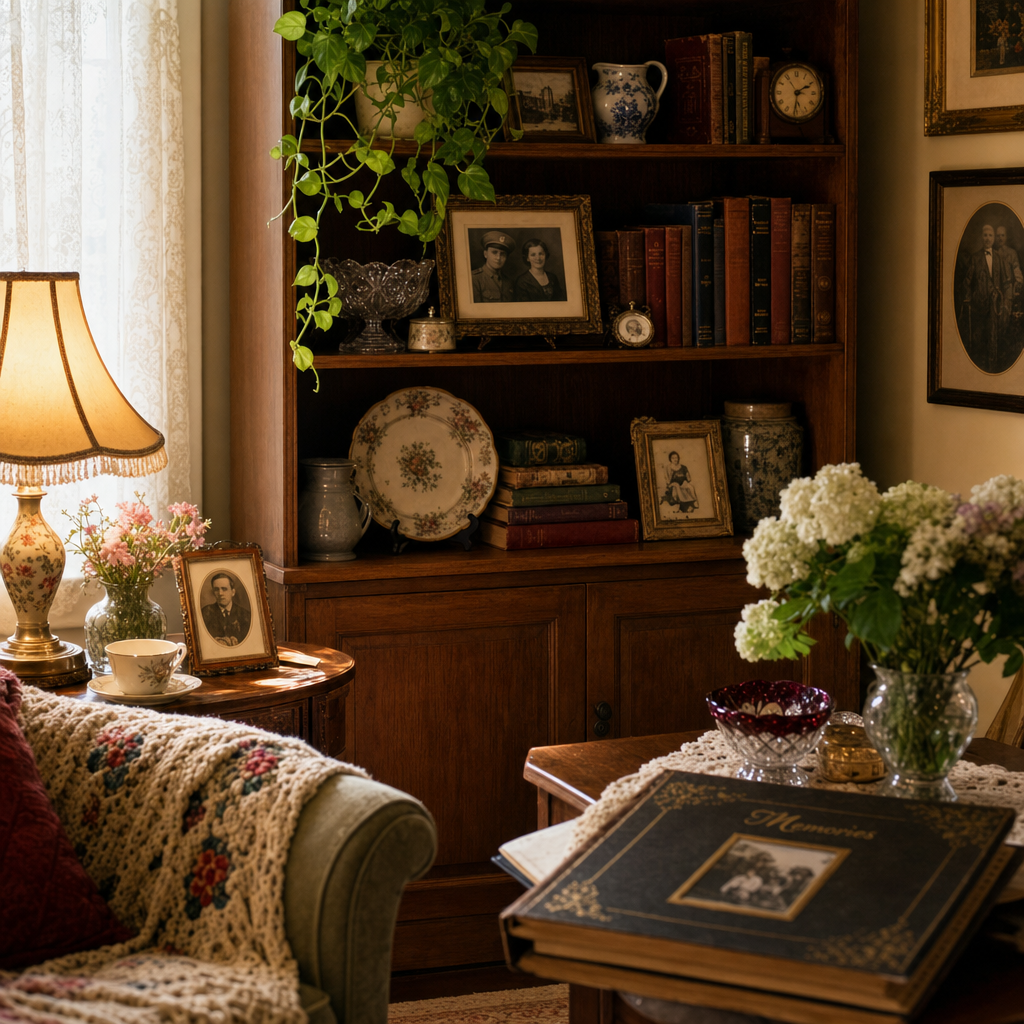
The conversation surrounding home aesthetics—whether it leans towards the traditional clutter of heirlooms and stories or the stark minimalism of modern design—is ultimately about the emotional resonance of space. Throughout history, the evolution of decor has reflected broader societal shifts and individual needs. In this context, the evolution towards modern decor can be seen as an answer to a culture increasingly characterized by transience and impermanence.
From a historical perspective, ornamentation was once a testament to a craftsman’s skill, a sensory demonstration of quality that permeated pre-industrial design. The shift towards minimalism, with its simplicity and neat lines, marked the onset of the industrial age’s embrace of utilitarianism and a desire for streamlined efficiency. This aesthetic change wasn’t merely superficial but a manifestation of the changing values and needs of society. Ornamentation gave way to function over form, reflecting a world progressively on the move.
Recent years have witnessed a lifestyle underpinned by constant mobility. Jobs demand relocation, neighborhoods change, and individuals find themselves frequently uprooting. The result is a demand for spaces that echo this fluidity—a hallmark of modern decor with its clean lines and impersonal ambiance. These spaces are deliberately designed to be easily vacated or transformed, mirroring the fluidity of contemporary life.
However, this trend isn’t universal, nor is its appeal evenly spread across demographics. The allure of a house filled with books, photographs, and seemingly cluttered but storied artifacts remains strong, particularly for those who have experienced the warmth of generational homes. Such spaces tell stories, evoking a sense of belonging and continuity amidst the uncertainty of the outside world.
Children and individuals on the autism spectrum, for example, often find such environments calming due to their structured narratives and familiarity. A book-laden shelf or a wall lined with family photographs provides a visual narrative that speaks to personal histories and identities. In contrast, the generic aspect of transient spaces, despite being dubbed “comforting” for their simplicity, can feel stark and impersonal, devoid of the comforting chaos of lived experience.
Moreover, the discussion around economic stratification emerges when considering the accessibility and implications of contemporary designs. Modern decor—often associated with sparse aesthetics—ironically aligns with affluent tastes, due in part to its perceived sophistication and perhaps as a statement of non-dependence on material possessions. Wealthier individuals can afford to maintain minimalist aesthetics, often hiring staff to sustain the pristine nature of their homes. Meanwhile, those with less economic freedom may find richness in well-loved, cluttered spaces that serve as a sanctuary filled with meaningful possessions.
Yet, as much as the discussion contrasts minimalism with clutter, the issue extends beyond decor to societal behaviors and technological influences. For instance, the disconnect some feel with modern aesthetics may also be exacerbated by the effects of digital culture, where constant consumption of digital media tills a new form of distraction and impermanence, untethered from any physical space.
Finally, the choice of decor reflects one’s relationship with space and time. Those who move frequently may unwittingly champion simplicity for practicality, while those who lay down roots find value in spaces that speak to their continuity and past. For each individual, a home must resonate with personal narratives—whether through stories told through its clutter or the serenity of its simplicity.
The dialogue on decor styles is a reflection of our search for identity and permanence in a rapidly shifting world. It encourages us to ponder how our environments shape us and how we, in turn, shape them, serving as a reminder that design is not merely about aesthetics but about the curated tapestry of our lives, encompassing the chaos of the past and the simplicity of the present.
Disclaimer: Don’t take anything on this website seriously. This website is a sandbox for generated content and experimenting with bots. Content may contain errors and untruths.
Author Eliza Ng
LastMod 2026-07-12