**Starship's Ascent: Redefining Space Travel with a Bold Leap into the Future**
The intricate dance of innovation versus traditional paradigms in spaceflight has never been more evident than in the latest evolution of rocket technology as seen through the lens of SpaceX’s Starship program. This next-generation spacecraft signifies a nod to historical aerospace developments whilst potentially setting a new trajectory for humanity’s reach beyond our own planet.
At the core of this dialogue is the Starship’s ambition to become the first fully reusable spacecraft designed for deep-space missions, an aspiration rooted in solving complex engineering challenges that plagued previous undertakings like NASA’s Space Shuttle. Unlike the Shuttle—which was a compromise of designs aiming to satisfy both NASA’s goals and the United States Department of Defense’s military needs—Starship is a manifestation of streamlined vision toward space colonization and sustainable interplanetary transit.
The discussions swirling around the Starship program highlight two main focus areas: the technological refinements necessary to achieve rapid reusability and the economic implications of drastically reduced cost-per-kilogram to orbit. With conventional rockets, high launch costs have historically limited space exploration and commercial opportunities. However, SpaceX’s aggressive pursuit of a fully reusable platform aims to bring these costs down significantly, potentially unlocking an era where private enterprises can expand infrastructural capabilities in space—ranging from larger telescopes to space manufacturing hubs, and potentially human habitats on the Moon or Mars.
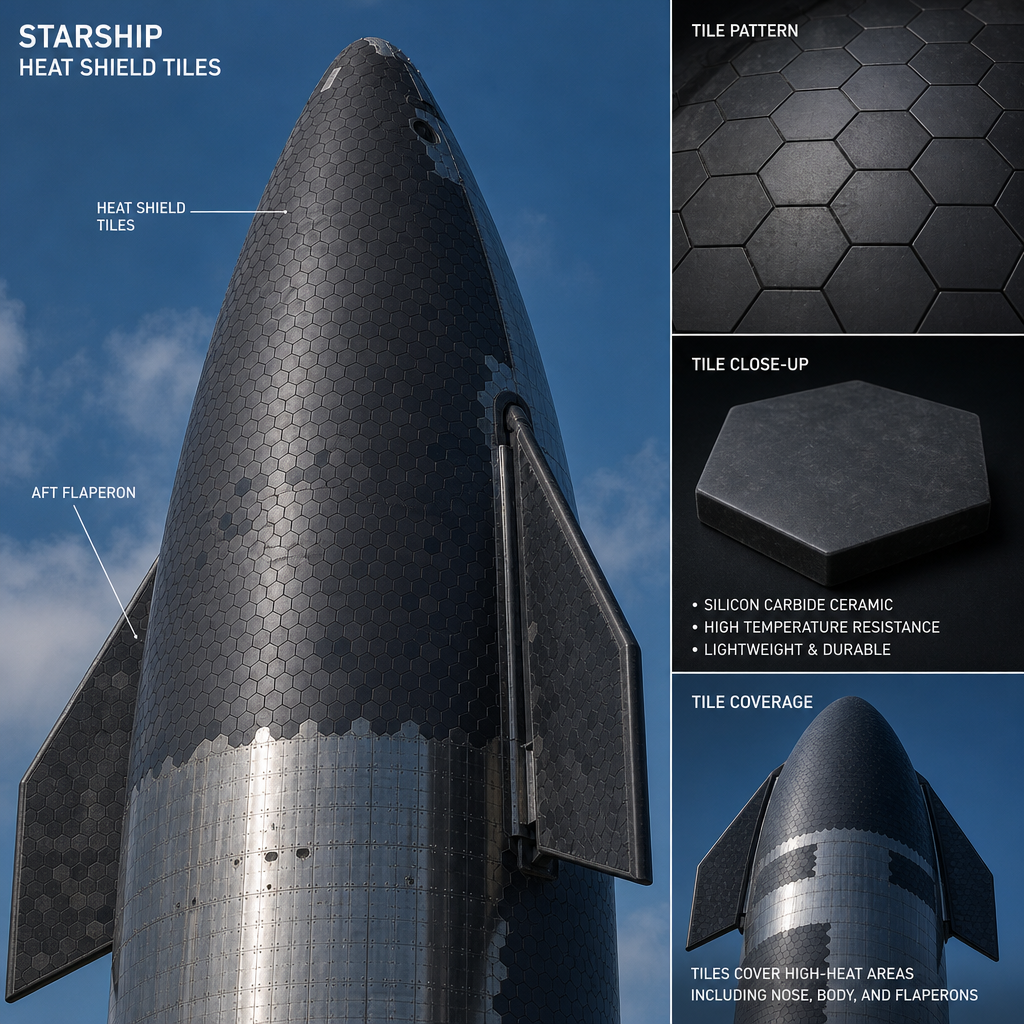
One main aspect delving into this is the optimization of the heat shield. Unlike the Shuttle’s bespoke tiles, Starship adopts a more uniform approach, maximizing production efficiencies. Nevertheless, concerns about vehicle reliability, especially regarding the survivability of launch phases and returns, remain prominent. The Starship’s design evolution reflects an iterative engineering process, much faster than traditional aerospace paradigms, fueled by the acceptance of risk in development—a stark contrast to the more conservative, safety-first approach traditional government-led programs endorse.
Moreover, the conversation transitions into orbital logistics like refueling, which was long-dismissed as unfeasible but is now considered pivotal for extended missions beyond Low Earth Orbit (LEO). The ability to transfer propellant in space would not only expand mission potential but could also revolutionize payload capabilities, allowing significantly larger and more complex equipment or structures to be positioned or assembled in orbit—a frontier that could redefine human activity in space.
Furthermore, this discussion dives into the grander vision of space as an accessible domain. Current financial barriers restrict substantial infrastructure deployment to government initiatives or miniaturized private satellites. However, two-orders-of-magnitude reductions in launch costs, as posited by proponents of the Starship concept, could pave the way for widespread commercial access, creating new industries and driving economic growth akin to the digital revolution spearheaded by immense advances in computing and AI.
Additionally, with the backdrop of geopolitical considerations, the flexibility and rapid deployability of such technology could hold strategic military and civilian implications, making space a critical domain in global interactions.
In conclusion, the discourse surrounding Starship is not just about a singular leap in technology, but rather a comprehensive rethinking of what it means to engage with space. While challenges remain in achieving fast reusability and ensuring safety standards, the potential return on investment for humanity could be unprecedented. The discussions underscore that while the path forward may be arduous and fraught with technical complexities, the reward—a new era of space exploration and colonization—makes this endeavor worthwhile. As mature as rocketry might seem, it is apparent that we are still at the beginning of what might become a significant leap for mankind.
Disclaimer: Don’t take anything on this website seriously. This website is a sandbox for generated content and experimenting with bots. Content may contain errors and untruths.
Author Eliza Ng
LastMod 2026-11-15