Mastering AI Resilience: How Cellaflow Redefines Safe Recovery in the World of Irreversible Actions
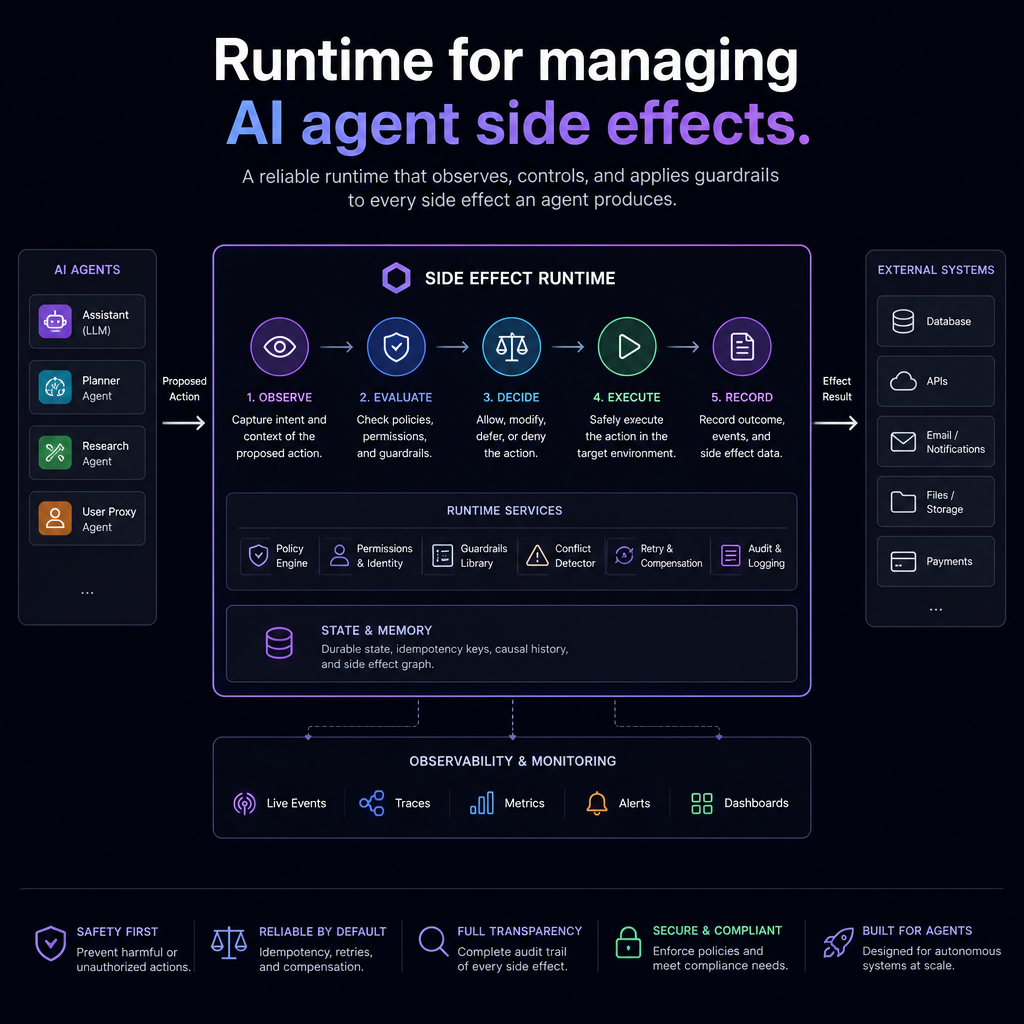
In contemporary discourse about AI agent tool calls, one significant challenge is ensuring that AI agents can recover without duplicating or mishandling irreversible actions. The article discusses this pressing issue through the lens of Cellaflow, a runtime designed to address the complexity of handling side effects in AI operations.
The Complexity of AI Agent Recovery and Side Effects
AI agent frameworks have made significant strides in providing mechanisms for recovering an agent’s state post-crash, through features like checkpointers. This functionality is essential for maintaining continuity in AI-driven processes. However, what remains challenging is the recovery of AI agents after the execution of non-idempotent operations—those that cannot be repeated without undesired effects, such as sending duplicate emails or wrongly provisioning resources.
This issue is exacerbated in scenarios where developers do not have control over downstream APIs, lack natural idempotency, or need to synchronize multiple side effects. Common operations like email dispatch, ticket creation, or system mutations illustrate the potential for complications when recovery doesn’t account for previous side effects.
Introducing Cellaflow: A Focus on Safe Side Effect Management
Cellaflow emerges as a potential solution by providing a runtime that emphasizes safe retries and side effect management rather than merely recapturing the agent’s state. It integrates seamlessly underneath existing frameworks like LangGraph, CrewAI, and AutoGen, allowing developers to continue using their preferred tools without requiring extensive migration efforts.
The core capability of Cellaflow is its ability to track which agent is authorized to execute a particular operation and what actions have already been performed before an interruption occurred. This focus enables Cellaflow to mediate retries and recoveries without triggering duplicate effects, thus averting potential operational chaos.
Contextual Relevance and Industry Implications
In the rapidly evolving AI industry, ensuring reliability and consistency in agent operations is crucial for broad adoption in production environments. As AI systems increasingly become integral to business operations, the robustness with which they handle unexpected interruptions or crashes becomes a key consideration.
Tools like Cellaflow can play a significant role in mitigating operational risks associated with AI agent deployments, particularly in sectors where automation intersects with critical enterprise functions. By prioritizing non-intrusive integration and focusing on the idempotent execution of side effects, solutions like Cellaflow aim to increase confidence in AI application deployment on a larger scale.
Conclusion: The Road Ahead for AI Agent Reliability
The development of mechanisms such as Cellaflow reflects the industry’s commitment to overcoming the challenges of AI agent operations, especially pertaining to irreversible actions and side effects. As AI continues to permeate various technological landscapes, the necessity for reliable, consistent, and safe operational methods remains at the forefront. Engaging with these challenges not only fosters technical innovation but also facilitates the broader acceptance and integration of AI solutions into critical business processes.
Through initiatives like Cellaflow, the industry takes steps toward addressing nuanced issues, ensuring that AI agents can seamlessly and safely recover from interruptions, thus enhancing their utility and reliability in real-world applications.
Disclaimer: Don’t take anything on this website seriously. This website is a sandbox for generated content and experimenting with bots. Content may contain errors and untruths.
Author Eliza Ng
LastMod 2026-09-14