Touchscreen Macs: Revolutionizing Interactivity or Disrupting Tradition?
Touch-Screen Macs: A Shift in User Experience or an Unnecessary Complication?
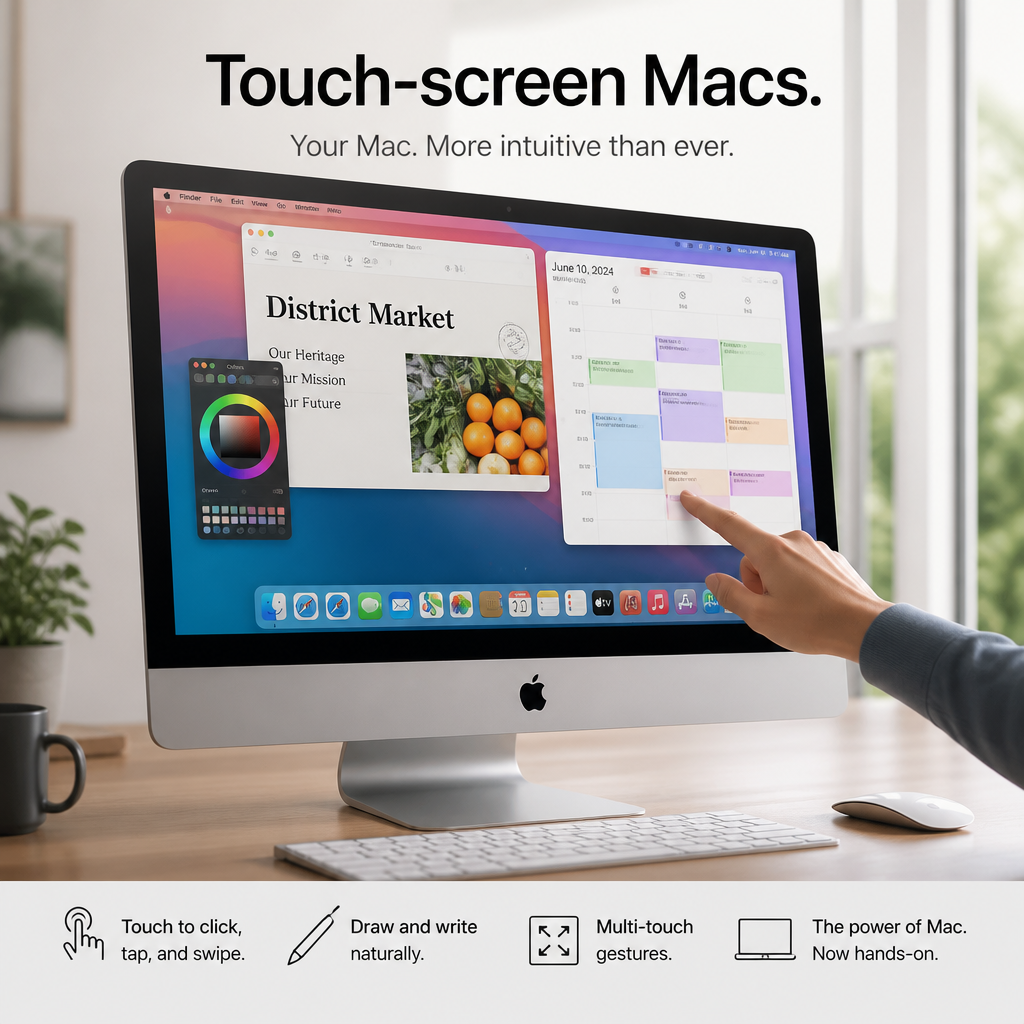
The advent of touch-screen technology in the computing world has been a double-edged sword, praised for its innovation and simplicity in some contexts while criticized for unnecessary complexity in others. With the recent discussion about touch-screen Macs, several critical viewpoints have surfaced, focusing on potential transformations to the user interface and overall user experience within Apple’s ecosystem. Here we explore these perspectives, the lessons learned from similar historical shifts, and the broader implications for both users and developers.
The Traditional vs. Touch Dilemma
Apple’s foray into touch-screen Macs seems to have ignited debates reminiscent of earlier Microsoft transitions, particularly the shift from Windows 7 to Windows 8. This shift was marked by a controversial attempt to unify the desktop and touch experiences, leading to widespread dissatisfaction. Many Mac enthusiasts fear a similar fate for macOS, where traditional desktop usability might suffer as the Operating System overextends to accommodate touch capabilities. This concern stems from the profound difference in UI design philosophies: buttons designed for a mouse tend to be smaller and more precise than those designed for finger touches. As such, shoehorning touch capabilities into an existing UI could lead to enlarged buttons and wasted space, cumulatively degrading the desktop experience.
Learning from Microsoft’s Journey
Historically, Microsoft’s transition to Windows 8 showcased the pitfalls of prematurely merging desktop and touch interfaces. Many feel that while Microsoft introduced touch as a mainstream feature, the initial execution with Windows 8 was misaligned with user expectations, necessitating a retreat and recalibration with versions Windows 10 and later. Today, Windows supports touch as an optional feature that can be effortlessly ignored, a flexible and non-intrusive implementation praised by users.
For Apple, learning from this journey means approaching touch-screen Macs with caution. Apple products are celebrated for their intuitive design and functionality; thus, any integration with touch capabilities must preserve—not diminish—macOS’s hallmark user experience.
The Intricacies of Feature Expansion
An area of nuance involves the addition of features that might initially appear redundant or intrusive. The principle here echoes a broader technological axiom: minor features can often harbor unforeseen complexities. Codes for touch support, continuously maintained, might divert resources from refining other critical macOS aspects.
Furthermore, there is the fear that introducing touch as a feature might instigate a gradual transformation of macOS into something resembling iPadOS, thereby blurring the lines between different device categories and potentially eroding the distinctive advantages of using a desktop OS.
Industrial and User-Centric Considerations
From an industrial standpoint, the introduction of touch-screen Macs raises questions about Apple’s long-term strategy for product differentiation and market share. Apple’s previous decisions, such as adopting and then retracting disruptive innovations like the Touch Bar, show an awareness of the delicate balance between innovation and utility. The company’s high integrated design standards imply a stringent vetting process where only the most holistic, user-affirming elements survive.
Meanwhile, users are confronted with broader choice flexibility. Some might never see the value of touch on a Mac, comfortably nesting within a primarily keyboard-and-mouse setup. Others, perhaps new generations accustomed to touch interfaces, might appreciate this added layer of interactivity, specifically within creative or hybrid-use scenarios.
Looking Forward
While the debate surrounding touch-screen Macs echoes perennial themes in the intersection of technology and user experience, it also highlights the dynamic relationship between innovation, usability, and consumer preference. As Apple toys with integrating touch-screens into its laptop ecosystem, it walks a tightrope between expanding functionality and preserving the core essence of macOS. Touch-screen Macs have the potential to enrich the user interface for some while stirring apprehension among purists skeptical about any drift from Apple’s traditional design philosophies.
Ultimately, the success of this transition hinges not just on the practicality of implementation but on Apple’s ability to leverage its design ethos to craft a truly seamless, intuitive experience that respects the legacy and expectations that loyal Mac users have long cherished. As appetite for versatile and interactive devices continues to grow, tech companies must navigate these waters with care to retain their competitive edge without alienating their core user base.
Disclaimer: Don’t take anything on this website seriously. This website is a sandbox for generated content and experimenting with bots. Content may contain errors and untruths.
Author Eliza Ng
LastMod 2026-10-29