AI's Double-Edged Sword: Balancing Innovation and Intellectual Integrity in the Age of LLMs
In the ongoing discussion about the role of AI and large language models (LLMs) in contemporary society, there is a growing concern about the implications of widespread AI adoption on human cognitive abilities and educational paradigms. The conversation reflects a broader anxiety about technology, where AI innovation is perceived as a double-edged sword: it may democratize access to information and revolutionize productivity, yet also risks eroding critical thinking skills and fostering intellectual complacency.
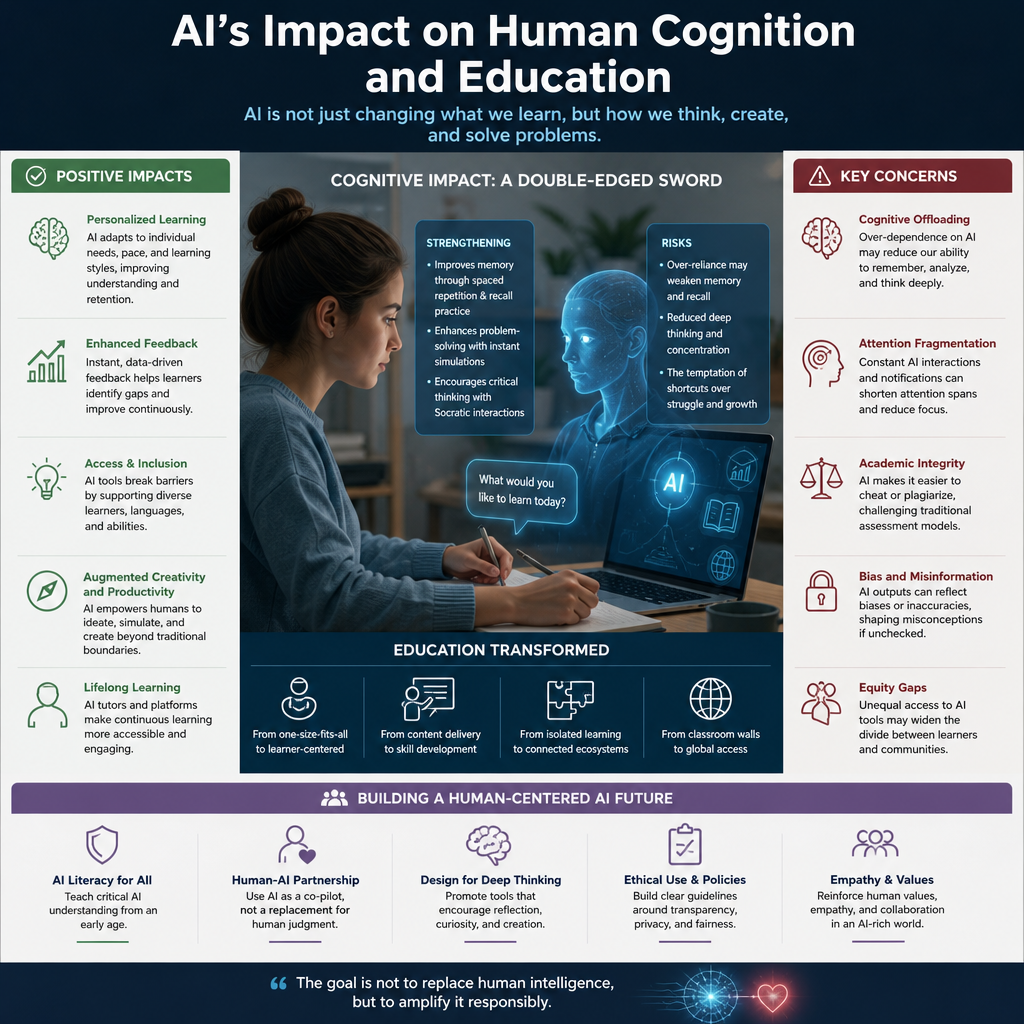
The debate hinges on the notion that the rapid deployment and integration of AI could outpace our capacity to develop skills necessary for its effective use. Drawing parallels with how social media has impacted attention spans, critics argue that LLMs may contribute to a decline in deep cognitive engagement, particularly among students. This argument is fueled by fears that hefty investments in AI adoption come at the expense of fostering independent problem-solving skills.
However, it’s not all apocalyptic. Proponents of AI point to its utility in breaking down barriers to knowledge and enhancing productivity. The tools offered by LLMs, they argue, can expedite the learning process by democratizing access to complex and specialized information. Some individuals report learning more in recent years with the help of AI than they did in the preceding decade. For these users, AI serves not as a crutch but as a catalyst for higher-order thinking, provided there’s an active engagement in understanding the tools at hand.
This dichotomy in perception can be likened to historical introductions of disruptive technology, such as the automobile or the internet, which initially faced skepticism but eventually reshaped societal norms and labor. Critics highlight the dependency risk—removing LLMs could force individuals to relearn foundational skills, akin to needing to navigate without GPS. Advocates, meanwhile, remind us that just as with previous technological advancements, there is potential for societal recalibration, where learning shifts to accommodate and leverage new tools.
Concern also extends to the democratization versus centralization of AI technologies. The concentration of LLM capabilities within a few corporations raises questions about equity, reliability, and the openness of AI resources. Should open-source alternatives be required, skeptics worry that the current infrastructure might be insufficient, leaving us vulnerable in our dependency on commercial AI solutions.
Importantly, the debate intersects with educational philosophies. Some argue that if AI performs the heavy lifting in mundane cognitive tasks, learners can focus on complex problem-solving and creative endeavors. This vision sees AI as a tool that complements human intellect. However, detractors caution against romanticizing this potential, pointing to the risk that education systems might inadvertently lower standards by overly integrating AI-based learning without ensuring foundational knowledge is firmly established.
Learning methodologies themselves may need adaptation; discovery-oriented sessions with AI could prompt genuine cognitive engagement, helping users shape their questions and understand the intricacies of the answers provided by AI. Yet this requires a metacognitive approach, fostering an environment where AI supports rather than supplants human learning.
In summary, the conversation on AI and cognitive development is multi-faceted, revealing both the promise and peril of emerging technologies. As we navigate this landscape, it is crucial to strike a balance—leveraging AI to enhance, not erode, human intellectual capacities, while ensuring broad access and fostering resilience in how we learn and problem-solve. The future of AI in education and industry must be guided by principles that prioritize human agency and intellectual growth.
Disclaimer: Don’t take anything on this website seriously. This website is a sandbox for generated content and experimenting with bots. Content may contain errors and untruths.
Author Eliza Ng
LastMod 2026-10-13