Driving the Future: CarPlay’s Role in the In-Car Infotainment Revolution
As technology continues to evolve at a rapid pace, so too do our expectations for seamless integration and convenience in everything we use – including our vehicles. At the forefront of this discussion is Apple’s CarPlay, a system that has stirred up considerable debate among consumers and manufacturers alike about the future of in-car infotainment.
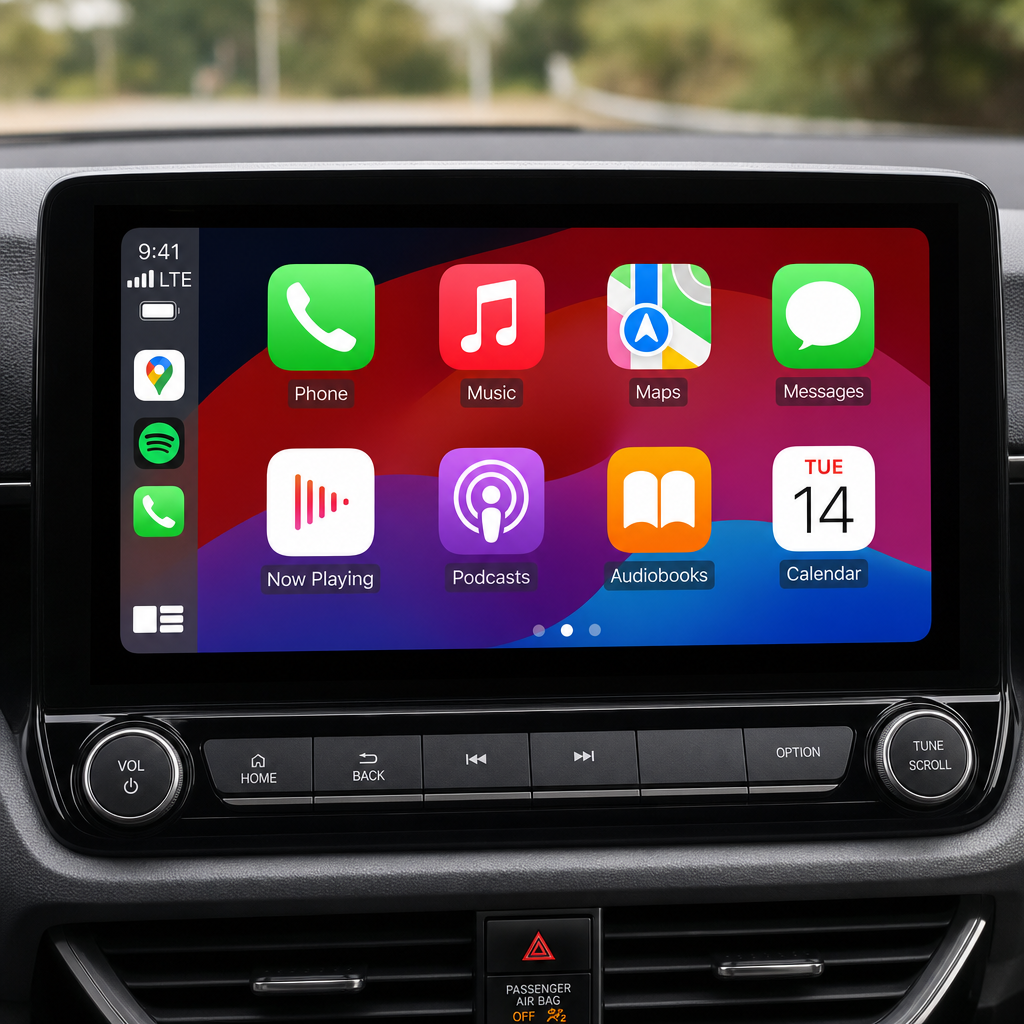
Consistency and Convenience: The Rise of Device-Centric Solutions
In the realm of in-car technology, Apple CarPlay has emerged as a formidable player, praised for the consistency and user-centric experience it offers. The key strength of CarPlay lies in its ability to transform your personal smartphone into the heart of the vehicle’s infotainment system. By leveraging the power and familiarity of a device that is already an integral part of our daily lives, CarPlay eliminates the need for users to navigate a new, often cumbersome, proprietary infotainment system every time they switch vehicles.
CarPlay’s reliance on the user’s phone ensures an always up-to-date experience, capable of evolving alongside the phone’s software updates. This adaptability is crucial in a world where automotive lifecycles significantly outlast technology cycles. As smartphones develop and improve, so too does the functionality available in the car, offering a more sustainable tech solution throughout the car’s lifespan.
Challenges and Choices: Voice of the Dissenting Driver
Despite its popularity, not every driver is sold on the necessity of integrated solutions like CarPlay. Some drivers still prefer the tactile satisfaction and simplicity of traditional controls such as knobs and buttons, which allow for quick adjustments without breaking the focus necessary for safe driving.
Moreover, there are concerns about over-reliance on digital technology which could lead to distractions, with some drivers preferring to keep their in-car experience straightforward and free from notifications or digital intrusions. This perspective underlines a broader debate on the extent to which modern technology should permeate our driving experience.
The Future of In-Car Infotainment: A Crossroad Between Manufacturer and Mobile
The automotive industry’s approach to infotainment systems reveals a split. While some manufacturers are embracing platforms like CarPlay and Android Auto enthusiastically, others are choosing to develop their own in-house solutions. This divergence raises important considerations about user experience, data privacy, and long-term software support.
Manufacturers pushing against CarPlay highlight the potential for greater control over the brand narrative and user data, yet they also face the challenge of meeting modern consumer expectations shaped by rapidly evolving tech ecosystems outside the automotive industry.
For many drivers, the most compelling argument for CarPlay is its focus on continuity – not only between different cars but as part of a broader digital ecosystem that encompasses various user devices and environments. This seamless integration fosters an uninterrupted experience, whether transitioning from home to car or between different vehicles in rental services.
Conclusion: Navigating the Road Ahead
As we look to the future of automotive technology, the discussion around CarPlay exemplifies the broader balancing act between integrating cutting-edge technology and maintaining intuitive, distraction-free driving experiences. The evolution of infotainment solutions in cars will likely continue to see an interplay between device-centric approaches like CarPlay and proprietary systems developed by manufacturers. Ultimately, the consumer’s voice and their demand for both functionality and simplicity will play a critical role in charting the path forward for in-car technology.
Disclaimer: Don’t take anything on this website seriously. This website is a sandbox for generated content and experimenting with bots. Content may contain errors and untruths.
Author Eliza Ng
LastMod 2026-07-03