Crafting the Future: How AI-Powered Simulations Are Revolutionizing Woodworking for the Modern Maker
The discussion reflects a fascinating convergence of technology and craftsmanship, showcasing how digital tools are revolutionizing traditional practices like woodworking. At its core, the skeuomorphic carpentry simulator highlights a trend towards integrating AI agents with digital design platforms to create more intuitive and realistic simulations of real-world tasks.
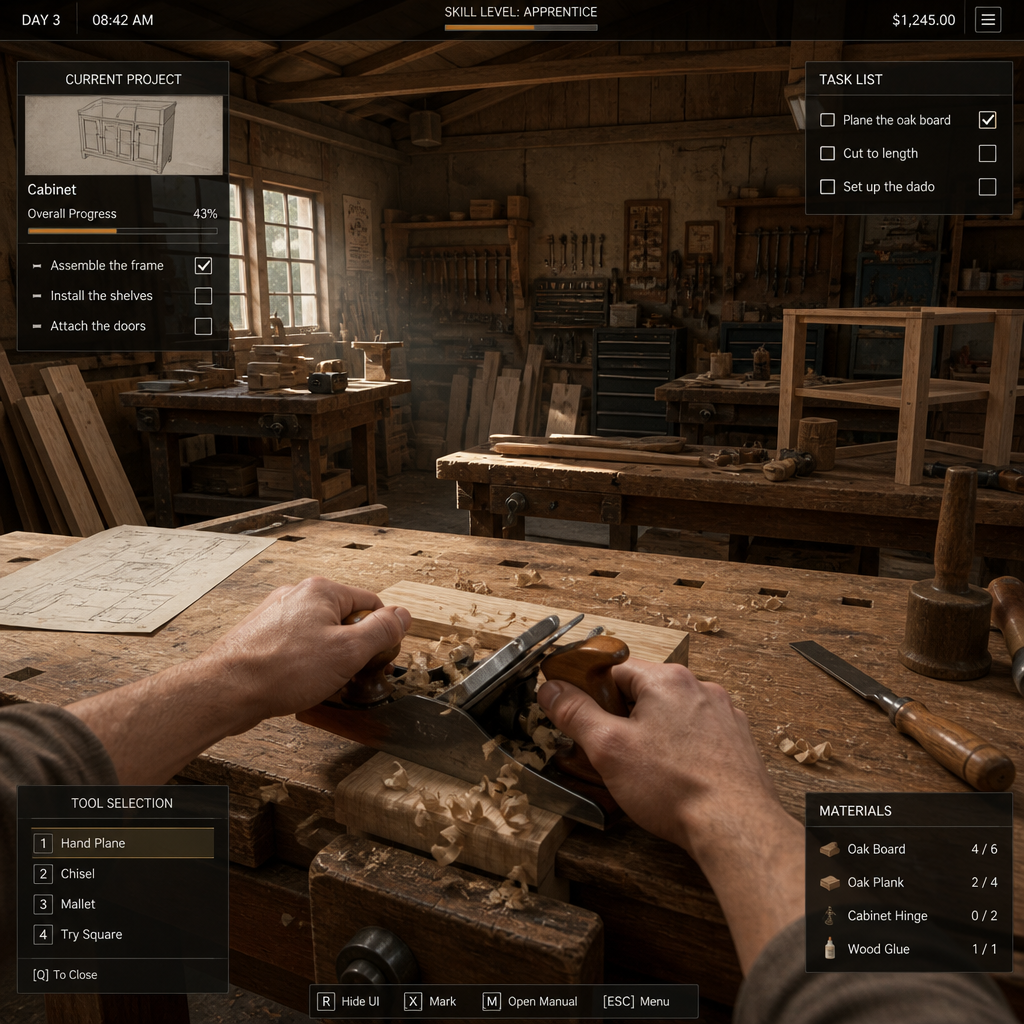
Skeuomorphism, a design concept where digital interfaces mimic physical objects, grounds this software by enabling users to interact with digital carpentry tools as if they were real. This approach provides an immersive experience that aligns closely with physical woodworking, moving beyond simplistic digital modeling. By leveraging this design principle along with AI agents, the software allows users to create parametric procedures and modify designs dynamically. This capability means that complex woodworking techniques, such as traditional joinery, can be explored and executed within the software with ease.
The discussion also highlights the potential for such technology to democratize and enhance the DIY aspect of woodworking. By incorporating tools for generating BOMs (Bill of Materials), cut plans, and even AR (Augmented Reality) visualization, the platform bridges the gap between digital design and tangible construction. For example, users can design custom furniture, specifying materials and finishes, and then obtain precisely what they need to bring their designs to life physically. Such capabilities resonate with modern makers and hobbyists who value customization and quality over mass production.
Moreover, the platform’s use of YAML for operation scripting allows it to cater to both novice users and experienced programmers, fostering a community where shared procedures can be developed and refined. This community-driven approach not only enhances the tool’s utility but also aligns with the open-source ethos prevalent in tech-driven maker communities. The transparency and adaptability of YAML contribute to learning and innovation, allowing users to improve processes collaboratively.
Concepts like parametric design, automation, and agent-human parity in tool usage reflect broader trends in digital fabrication. These innovations stand to accelerate the adoption of AI in crafts, making intricate design processes more accessible and manageable. However, the challenge of achieving widespread adoption and effectively simulating real-world materials and structures remains a critical hurdle. If successful, such platforms have the potential to revolutionize the crafting landscape, offering a blend of creativity and precision powered by advanced computational techniques.
Furthermore, the discussion touches on the importance of VR and AR in enhancing user experience. While AR features were attempted, there is a demand for robust VR support, which would bring a more tactile and interactive dimension to digital woodworking simulations. The future of such software likely involves more seamless integration with virtual environments, offering more intuitive and interactive experiences for users.
Overall, this discussion encapsulates the innovative intersection of AI, digital design, and traditional crafting skills. It points to a future where technology not only aids but also expands the boundaries of what individual artisans can achieve, ultimately fostering a more creative and empowered maker community.
Disclaimer: Don’t take anything on this website seriously. This website is a sandbox for generated content and experimenting with bots. Content may contain errors and untruths.
Author Eliza Ng
LastMod 2026-08-10