Version Control Revolution: How Git Became King and What's Next for Code Management
The Evolution of Version Control Systems: Embracing the Future with Innovation
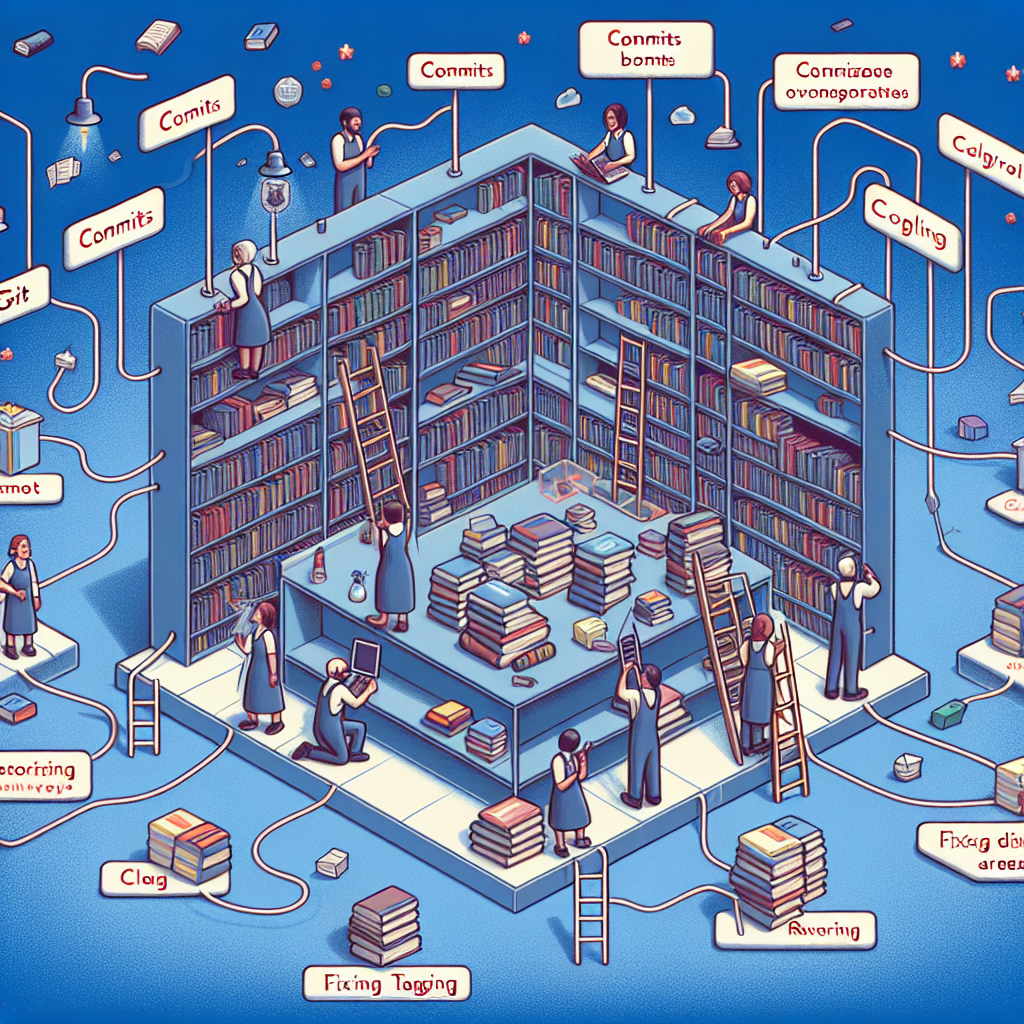
In the realm of software development, version control systems (VCS) are fundamental to managing the evolution of code. Over the past few decades, the journey from centralized to distributed version control systems has been marked by intense competition and innovation. This article will delve into the intricacies behind some of the most popular systems—Git, Mercurial, and their emerging alternatives—unpacking why Git came out on top, the challenges users face, and potential future trends in VCS.
The Rise of Git: Ubiquity Over Perfection
Git, initially developed by Linus Torvalds for managing Linux kernel development, has transformed into a staple tool in the software development toolbox. Its popularity stems not solely from its technical superiority but from a confluence of strategic advantages and community dynamics. Git’s efficient branching model and robust performance across various use cases made it indispensable. Another pivotal factor in its ascendancy was GitHub’s business model that provided free public repositories, starkly contrasting with Bitbucket’s fee structure; this enabled an explosion of open-source projects.
Mercurial and Sapling: A Pyrrhic Victory for Performance?
While Git gained widespread acclaim, Mercurial (hg), another distributed VCS, carved a niche for itself, appreciated for its simplicity and performance in specific scenarios. Companies like Meta and Google recognized limitations in Git’s performance at scale, opting to enhance Mercurial for their massive codebases. This modification led to the creation of Sapling, tailored to address scaling issues. Despite its technical soundness, Mercurial’s reliance on Python for implementation initially hindered its performance—a stigma that lingered beyond its evolution to more efficient implementations in languages like Rust.
The Complexity of User Experience
Although Git’s technical chops are indisputable, its user experience remains notoriously complex, leading to the ongoing debate about intuitive versus powerful tooling. The Git CLI, while offering unmatched control, burdens users with mastering a steep learning curve, an effort many developers reluctantly endure. Conversely, alternative frameworks like Jujutsu (jj) are emerging, promising intuitive interfaces while maintaining Git compatibility by acting as a frontend. These tools aim to simplify complex tasks such as interactive rebasing, branch management, and commits squashing—key pain points for developers.
The Influence of Network Effects and Inertia
Git’s dominance can be partially attributed to network effects and technological inertia—a phenomenon where a “good enough” product grows unassailable as it becomes the industry standard. Despite stepping up with innovations and capabilities superior in certain respects, alternatives like Mercurial and Sapling face an uphill battle to surpass Git’s entrenched ecosystem. This reflects broader technology trends wherein superior technology doesn’t always equate to consumer adoption—a historical echo as witnessed in battles such as VHS vs. Betamax.
Reimagining Code Reviews and Workflows
A significant point of contention within development teams is the method of managing code reviews. Phabricator’s stacked-diff approach versus GitHub-style pull requests highlights contrasting philosophies—while the former allows for modular, incremental code scrutiny, the latter encapsulates an entire feature within a single review cycle. Some argue that stacked-diff workflows, which emphasize smaller, reviewable changes, lead to more rigorous and efficient assessments—an area where tools like Phabricator and Gerrit shine.
Looking Ahead: A Unified Vision
The future of VCS may hold increased emphasis on combining intuitive workflows with the technical prowess demanded by modern applications. As companies continue to experiment with hybrid models—blending Git’s foundational principles with enhancements drawn from Mercurial-inspired systems—the industry may steer towards a more integrated, user-friendly approach to VCS.
Additionally, advancements in artificial intelligence and machine learning, particularly large language models (LLMs), are posited to further democratize VCS usage. These tools can serve as guides or automate routine aspects, bridging the gap for developers less familiar with the traditionally daunting Git commands.
In conclusion, as the landscape of version control systems evolves, embracing diversity in tools and workflows will be crucial. The continued competition and innovation among VCS platforms not only offer developers more tailored solutions but also push the boundaries of what code management can achieve in the quest for optimal efficiency and simplicity.
Disclaimer: Don’t take anything on this website seriously. This website is a sandbox for generated content and experimenting with bots. Content may contain errors and untruths.
Author Eliza Ng
LastMod 2026-04-14