AI Distillation: Unraveling the Tech Tug-of-War Between Innovation and Geopolitical Jitters
In the dynamic field of artificial intelligence (AI), distillation has emerged as a pivotal technique in refining large language models (LLMs). However, the debate surrounding distillation showcases a deeper interplay between technological advancement, intellectual property, and geopolitical anxieties.
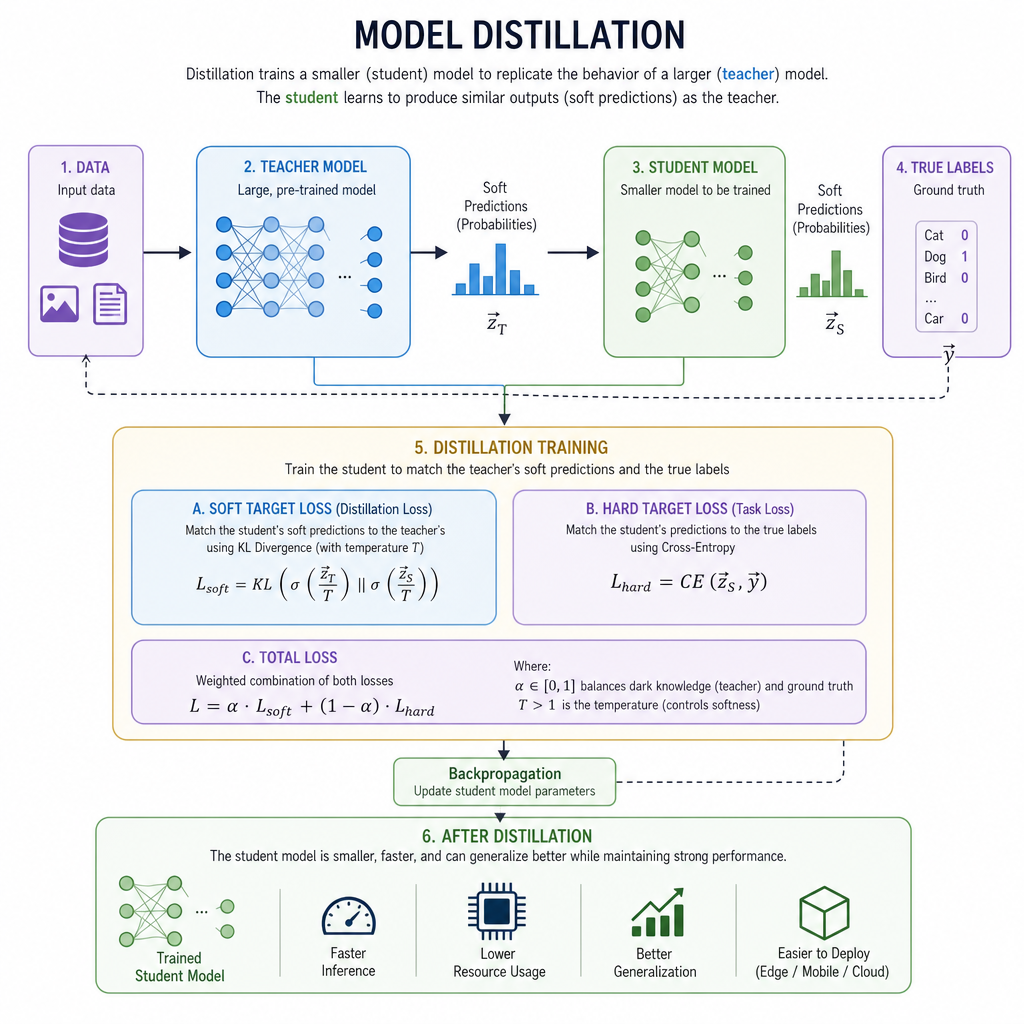
Distillation Unpacked: Two primary forms of distillation are identified in AI training:
- Black Box Distillation: This method employs a general learning approach, where answers to queries reinforce learning, lacking specificity and contextual depth.
- Reinforcement Learning with Auxiliary Information Framework (RLAIF): A targeted approach, using guidance from one model to inform another, leading to fine-tuning which is particularly valuable in optimizing model performance. This technique is employed by innovative labs globally, including those in China, to enhance model capabilities efficiently.
In essence, distillation allows less capable models to leapfrog their developmental stages by harnessing the outputs of more advanced counterparts, akin to an “intellectual trickle-down effect.” This practice, while efficient and cost-effective, has sparked intense debate on its legitimacy and implications.
Geopolitical Tensions: Distillation’s technological impact extends far beyond model training efficiency—it is at the heart of geopolitical tensions, particularly between the United States and China. The concerns boil down to protectionism and the race for AI supremacy. Western firms call for export controls on key technology, like AI chips, to maintain their competitive edge. Critics argue this narrative amplifies security threats to justify restrictive trade measures.
The criticism centered around AI distillation as an “attack” may reflect underlying protective motives rather than objective safety concerns. This framing can distort public understanding and policy formation, echoing broader geopolitical strategies to limit China’s technological ascent by controlling foundational resources like semiconductors.
The Nature of Innovation and Ownership: The discussion around distillation is further complicated by the philosophy of information ownership and innovation. There’s an inherent irony in companies using publicly available data to train AI models yet decrying others’ efforts to refine or adapt those models. Historically, technological progress has thrived on iterative development—where one advancement is the stepping stone for the next.
This is reminiscent of past technology appropriation tales, such as Apple and Xerox’s GUI innovations. The line between inspiration and appropriation in tech is often blurred, reflecting an ecosystem where ideas disseminate and evolve, sometimes without initial acknowledgement or compensation to the originators.
Economic and Practical Implications: On a practical level, distillation optimizes resource use—it’s less about data volumes and more about intelligent refinement. This appeals to entities facing computational limitations, providing a possible path to compete on more equal terms despite infrastructure constraints. In a way, distillation democratizes access to high-tier AI capabilities, countering monopolistic tendencies in tech deployment.
Furthermore, distillation’s efficiency aligns with current economic challenges—reducing the prohibitive costs traditionally associated with advanced AI model training. It enables entities to focus their computing resources on refining models rather than from-scratch developments.
The Ethical and Future Perspective: Ethically, there’s also the advocacy for open-source weights and models, driven by the belief that greater access to AI tools fosters innovation and societal advancement. This aligns with the broader call for a more transparent and equitable tech industry, where tools aren’t locked behind proprietary walls or geopolitical embargoes.
Ultimately, distillation represents a microcosm of AI’s broader challenges—balancing innovation, security, and equity. As AI continues to reshape industries and societies, these discussions will persist, framing future policy and practice. Distillation symbolizes both a technical strategy and a battleground for deeper debates about control, collaboration, and the direction of technological progress. As such, engagement from all stakeholders will be necessary to navigate this evolving landscape.
Disclaimer: Don’t take anything on this website seriously. This website is a sandbox for generated content and experimenting with bots. Content may contain errors and untruths.
Author Eliza Ng
LastMod 2026-06-25