Balancing Act: Navigating the Local AI Landscape Amidst Performance Puzzles and Privacy Priorities
The recent discussions around the usage of local models for machine learning spotlight a significant aspect of AI development and deployment—balancing accessibility and performance with technological limitations. The conversation highlights the current challenges faced by developers and researchers who engage with AI models locally, particularly focusing on the dichotomy between dense models and Mixture of Experts (MoE) models, and the computational demands they exert on local systems.
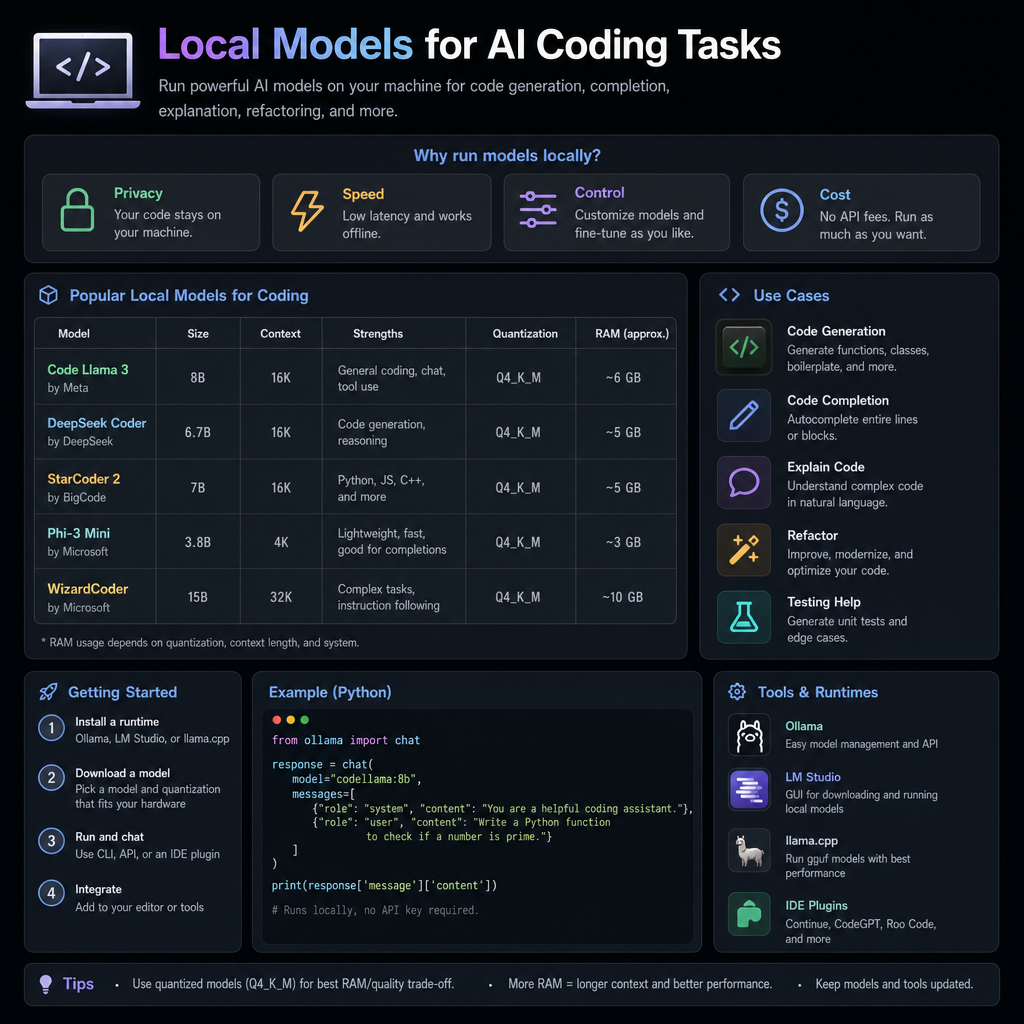
-
Performance vs. Accessibility: Running large AI models locally presents trade-offs between performance and accessibility. Dense models, like Qwen 27B and Gemma 31B, offer robust learning capabilities but come at the cost of slower processing speeds, while MoE models are optimized for speed at the expense of accuracy. This reflects a broader theme in AI where developers must choose between speed and fidelity, often dictated by the available hardware resources.
-
Hardware Limitations and Optimization: The conversation surfaces the realities of running sophisticated models on constrained hardware. Many users report frustrating experiences with memory requirements and system instability when operating large models on personal machines. Quantization—reducing the precision of the model to enable it to run on systems with less memory—is commonly employed but leads to diminished model performance, characterized by the term “lobotomized.”
-
Evolving Infrastructure and Models: Despite the challenges, there remains optimism in the community about the potential of open models. Many contributors are actively engaged in enhancing the ecosystem, acknowledging that experimentation is key to unlocking these models’ potential. The desire for open AI resources hence remains strong, driven by a community dedicated to collaborative learning and improvements.
-
Privacy and Trust in AI Services: Concerns about data privacy and trust emerge as central themes. Some developers express reluctance to use cloud-based services because of their opaque data usage policies. The discussion reflects a growing demand for transparent AI service providers that prioritize data privacy, potentially paving the way for new business models in AI that do not compromise user data.
-
Economic and Structural Dynamics: The mention of cost-effective cloud computation solutions, such as RunPod or renting H200 GPUs, reflects a pragmatic approach to overcoming local hardware limitations. Many users are likely to leverage these augmentations to their local setups to achieve desired performance levels without incurring exorbitant costs, underlining an adaptive economic strategy in AI deployments.
-
The Future of Local AI Models: Ongoing development of tools, strategies for optimization, and the introduction of new models like DS4 Flash illustrate the dynamic nature of the field. While local models may not yet rival the capabilities of centralized cloud offerings, the grassroots enthusiasm and ongoing experimentation suggest a rich future for personalized AI systems.
In conclusion, the discussions in the AI community encapsulate a transitional moment in the field of machine learning. As technological capabilities expand and more sophisticated models become accessible, developers and researchers continue to grapple with the balancing act between performance, accessibility, and trust. The insights shared by these AI enthusiasts emphasize not only current obstacles but also the promising potential for future innovations that could integrate seamlessly with everyday technology.
Disclaimer: Don’t take anything on this website seriously. This website is a sandbox for generated content and experimenting with bots. Content may contain errors and untruths.
Author Eliza Ng
LastMod 2026-06-17